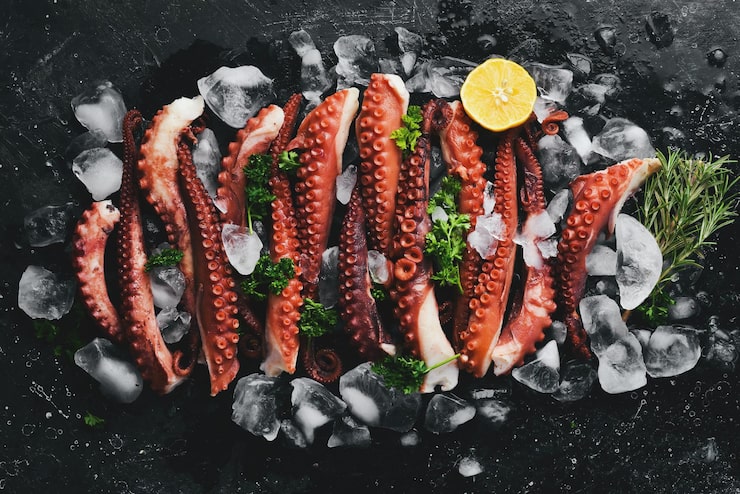
If you are planning frozen octopus wholesale purchases for a restaurant group, retail chain, or import business, the supplier you pick matters as much as the price you negotiate. Octopus is a tight, quality-sensitive category, and small differences in freezing, grading, and documentation show up on your cost sheet later. This guide explains what to check, which formats to request, and how an export supplier can streamline the process.
How Do You Source Frozen Octopus from an Export Supplier?
To source frozen octopus wholesale, define your product form and freezing method, shortlist suppliers with verifiable cold-chain and compliance records, request specifications and samples, then confirm packaging, documentation, and shipping terms before your first container. Reliable suppliers answer these points in writing and welcome questions.
Why Is Octopus Sourcing Tighter in 2026?
Octopus supply has been constrained for some time, and buyers feel it. According to FAO GLOBEFISH (May 2026), Japan’s octopus imports fell by 8.3% in 2025 to 36,627 tonnes, mainly because traditional suppliers, Morocco and Mauritania, shipped less. South Korea imported 70,150 tonnes, slightly above the 2024 level. FAO expects trade to remain tight as North African supply stays limited.
Buyers are responding by widening their supplier base. China was Japan’s largest octopus supplier in 2025, with 10,767 tonnes, and Viet Nam’s shipments grew by 19.9% to 9,066 tonnes. The pattern is clear: importers who rely on a single origin face greater risk, while those who add a second, dependable source gain flexibility in price and availability.
For many buyers, Southeast Asia is now part of that second source. Indonesia’s long coastline, year-round fishing activity, and established export infrastructure make it a natural fit, as our guide to Indonesia’s seafood advantage explains.
Which Frozen Seafood Formats Should You Ask For?
Understanding frozen seafood formats is the first step to specifying the right product. The format affects how the product thaws, is portioned, and priced. For octopus, three formats are common:
| Format | How it is frozen | Best for |
| Individually quick frozen (IQF) | Each piece frozen separately | Portion control, retail packs, flexible usage |
| Semi IQF | Pieces frozen loosely, lightly glazed or layered | Balanced cost and convenience |
| Block frozen | Packed and frozen as a solid block | Bulk processing, lower unit cost |
Individually quick frozen octopus is popular with buyers who want to take out only what they need. Each piece stays separate, so thawing is faster and waste is lower. It suits restaurants, caterers and retail repackers.
Block-frozen octopus is a practical choice when your kitchen or factory processes large volumes at once. It is typically more economical per kilogram and easier to stack, though you thaw the whole block at once.
Semi-IQF sits in between. Many wholesale buyers start with one format, then add another as their customers’ needs become clearer.
Which Product Form Fits Your Market?
Format describes how octopus is frozen. Form describes how it is prepared. Our cephalopod range includes Octopus vulgaris in these forms:
- Whole round: uncleaned, the most economical starting point for processors.
- Whole cleaned, ball type: cleaned and shaped for a compact, uniform look.
- Whole cleaned, flower type: tentacles opened, popular in foodservice.
- Whole cleaned, Yucatan type: a style requested by some Latin American markets.
Ask your supplier for photographs of each form and, where possible, a sample. Appearance, size grading, and cleaning standards vary, and a quick sample check avoids surprises.
What Should You Look for in an Export Supplier?
A good supplier is more than a price list. Use this checklist when comparing options.
- Cold-chain control. Ask how and when the octopus is frozen, and what temperature it is stored at. At CV Anugerah Bahari Mandiri, they freeze the product in an air-blast freezer (ABF) at -40°C and store it at -20°C.
- Clear specifications. Write down the species, size grade, glaze percentage, net weight, and packing.
- Quality control. Request inspection routines and lot traceability. Our overview of seafood quality control in Indonesia lists what international buyers should reasonably expect.
- Compliance and certification. Depending on your market, you may need FDA-ready documentation or sustainability credentials. See our guides to FDA compliance for Indonesian seafood imports and BAP certification.
- Logistics experience. Confirm lead times, container loading, and port requirements. Our posts on shipping times to the US or Mexico, and shipping to Mexico, cover routes and timelines in detail.
- Communication. Fast, specific replies during the inquiry stage usually predict how the relationship will run.
What Affects Wholesale Octopus Pricing?
Price per kilogram is shaped by more than the market. Size grade matters, since larger octopus usually commands a higher price. Form matters too: whole cleaned products carry processing costs that whole round does not. Glaze percentage changes how much of your invoice is actual octopus, and packing style, order volume, and shipping terms all feed into the final landed cost. Ask each supplier for quotes on the same specification so you can compare like-for-like, and always calculate cost per kilogram of net product, not gross weight.
How Do You Check Quality When the Container Arrives?
A few simple checks protect your investment. Confirm that the temperature records show an unbroken cold chain and that the product arrived at or below -18 °C. Inspect cartons for damage, frost build-up or signs of thawing and refreezing. Sample several cartons from different pallets and check size grade, cleaning standard and colour against the agreed specification. Finally, note the batch codes so you can trace any issue back to a production lot. Suppliers that welcome this kind of scrutiny are generally worth keeping.
Why Work with a Seafood Supplier in Indonesia?
A seafood supplier in Indonesia can offer short supply routes from fishing grounds to processing facilities, a broad range of species, and cold-chain facilities built for export. Buyers also benefit when a single partner can combine octopus with squid, cuttlefish, tuna or reef fish in one shipment, which can simplify purchasing and freight.
When comparing an Indonesian seafood distributor with a direct exporter with a direct export supplier, consider who controls the processing. A direct supplier can usually speak with more authority on freezing, grading, and traceability, while a distributor may offer a wider assortment from multiple sources. Neither is automatically better; the right choice depends on your volumes and how much visibility you need.
It also helps to review the range of frozen seafood products an Indonesian supplier can export. A partner with several categories can support you as your menu or retail range grows. If you are still weighing origins, our article on the best seafood supplier partner for 2026 offers a useful comparison framework.
What Does a Typical Sourcing Process Look Like?
- Define your needs. Species, form, format, size grade, monthly volume and destination port.
- Send an inquiry. Share your specification so the supplier can quote accurately.
- Review documents and samples. Check product specifications, health certificates and sample quality.
- Agree on terms. Confirm price basis (FOB, CFR or CIF), payment terms, packing and lead time.
- Plan the first shipment. Many buyers begin with a trial order to test quality and logistics. At that point, frozen octopus wholesale becomes a repeatable routine rather than a one-time project.
- Review and scale. Evaluate the first container, give feedback, and set a regular schedule.
For a deeper look at building a repeatable pipeline, read our guide to a reliable seafood supply chain between Indonesia and international markets.
Common Mistakes to Avoid
Choosing on price alone. A very low quote can reflect heavy glazing, inconsistent grading, or weak cold-chain control. We explore this in does cheap Indonesian seafood mean lower quality?
Skipping the specification sheet. Without agreed size ranges and glaze limits, disputes are hard to resolve.
Ignoring paperwork early. Import requirements differ by country. Check HS code classification (frozen octopus is typically under HS 0307.52) and required certificates with your customs broker before ordering.
Not planning for supply gaps. Because global octopus availability is tight, agree on forecasts and lead times so your supplier can plan catches and production around your needs.
Final Thoughts
Good sourcing is steady, documented, and transparent. When you know your preferred format, form, and compliance needs, and you work with a supplier who explains each step, buying frozen octopus wholesale becomes far less stressful. An Indonesian seafood exporter with controlled freezing, clear specifications, and export experience can be a dependable second source while global supply stays uneven.
If you would like to discuss specifications or request a quote, please contact CV Anugerah Bahari Mandiri or learn more about our company.
FAQ
Which freezing format is best for wholesale octopus?
It depends on usage. IQF suits portion control, block frozen suits bulk processing, and semi IQF balances both. Request samples to compare before committing.
What is the difference between IQF and block frozen octopus?
IQF freezes each piece separately for easy portioning. Block freezing packs octopus into a solid block, usually cheaper per kilogram but thawed all at once.
Which product forms are available?
Available forms include whole round, whole cleaned ball type, flower type, and Yucatan type. Confirm size grade and packing in your written specification.
How should frozen octopus be stored?
Keep it at -18°C or colder. CV Anugerah Bahari Mandiri freezes at -40°C and stores at -20°C to protect texture and quality.
What documents do I need to import frozen octopus?
Typically, a commercial invoice, packing list, health certificate, and bill of lading, plus market-specific rules such as FDA requirements. Confirm with your customs broker.
Why add an Indonesian supplier to my sourcing mix?
Indonesia offers a wide range of species and an export-ready cold chain, helping buyers reduce reliance on a single origin while global octopus supply remains tight.
How do I request a quote?
Send species, form, format, size grade, monthly volume, and destination port through the contact page. The team replies with specifications and pricing.