Indonesia’s fisheries exports hit US$6.27 billion in 2025, a 5.2% jump from the previous year, with the United States alone buying nearly US$2 billion worth of products. For importers, retailers, and foodservice buyers, the growth of seafood supply in Indonesia is exciting, but it also raises a hard question: how do you find a seafood supplier in Indonesia that businesses can actually depend on, year after year, shipment after shipment? A reliable supply chain isn’t just about catching fish. It’s about traceability, cold chain discipline, certification, and a partner who treats your business like their own. This guide breaks down exactly how to build (or choose) that kind of supply chain.
What Makes Indonesia a Strategic Source for Global Seafood Buyers?
Indonesia is the world’s largest archipelagic nation, with over 17,000 islands and some of the richest fishing grounds on the planet: the Makassar Strait, the Banda Sea, and the waters around Sulawesi in particular. This geography gives Indonesian fishery product exporters year-round access to tuna, skipjack, shrimp, octopus, cuttlefish, and reef fish species that are in constant demand across the US, Mexico, Japan, and the EU.
According to BPS (Statistics Indonesia), the country’s fishery trade surplus reached US$5.6 billion in 2025, a 3% increase year-on-year, driven largely by shrimp (US$1.87 billion to the US market alone) and tuna-skipjack products. That scale gives buyers real options, but it also means not every seafood export company operates to the same standard. You can browse the full range of species and cuts we process on our products.
Why Do International Buyers Need a Reliable Seafood Supplier Indonesia Partner?
A single missed shipment, a broken cold chain, or an uncertified batch can shut down a buyer’s import license or damage a retail relationship overnight. That’s why sourcing consistently from one vetted seafood supplier partner in Indonesia, rather than chasing the lowest spot price from a rotating list of traders, tends to protect margins better over the course of a full year. We’ve covered exactly what US buyers should be checking before they commit in our guide to sourcing from Indonesia in 2026.
Reliability isn’t a marketing word — it’s measurable. It shows up in on-time shipment rates, consistent cold chain temperatures, and paperwork that clears customs without delay.
The Key Pillars of a Reliable Seafood Supply Chain
Building or choosing a dependable supply chain comes down to four areas working together.
1. Sourcing and traceability. Buyers increasingly ask for full chain-of-custody documentation, from the fishing vessel to the processing plant. Indonesia’s SIMP (Traceability System for Fishery Products) framework exists for exactly this reason, and we’ve laid out how it applies to sourcing decisions in our SIMP sourcing guide. A genuine traceable seafood exporter will show you catch data, not just a certificate.
2. Certification and compliance. BAP certification and FDA compliance aren’t optional line items; they’re what keeps your containers moving instead of sitting in a bonded warehouse. We break down what buyers need to know in our articles on BAP certification and FDA import compliance for Indonesian seafood.
3. Cold chain and logistics. A frozen seafood exporter is only as good as its weakest link in the cold chain — from the processing plant in Makassar to the port, the vessel, and final delivery. Temperature excursions during any one of those legs can ruin an entire batch of frozen seafood products. Our breakdown of the Makassar-to-US cold chain process and typical shipping timelines to the US and Mexico can help you plan realistic delivery windows.
4. Pricing transparency. Currency swings (IDR/USD), farmgate prices, and freight volatility all move landed cost. A trustworthy seafood distributor or exporter will walk you through the cost stack rather than just handing you a number. Our guide to Indonesian seafood pricing explains why Indonesian products are often cheaper without sacrificing quality.
How Can Buyers Vet a Frozen Seafood Exporter Before Signing a Contract?
Before committing to a long-term contract with any seafood trader or exporter, ask for:
Current HACCP certificates, plus proof of FDA facility registration
Sample SIMP traceability records for a recent shipment
References from existing US or Mexico-based clients
A clear breakdown of FOB/CFR pricing and who covers which leg of freight
Cold chain monitoring data (temperature logs) from a past shipment
A legitimate seafood export company won’t hesitate to share this. If a supplier is cagey about documentation, treat it as a warning sign, rather than a negotiating tactic.
What Seafood Export Products Does Indonesia Offer?
Building Long-Term Partnerships With a Seafood Supplier Company
The most resilient supply chains aren’t built on one-off purchase orders; they’re built on relationships. A dependable seafood supplier company should function as an extension of your own operations: proactively flagging catch-season shifts, price movements, or regulatory changes before they become your problem. CV Anugerah Bahari Mandiri has built that kind of long-term partnership model with buyers across the US and Mexico; you can read more about our approach on our profile or see how we’re positioned for US-Mexico market demand.
If your business is ready to move beyond one-off orders and build a dependable, traceable, and cost-transparent seafood supply chain from Indonesia, contact CV Anugerah Bahari Mandiri to start the conversation.
FAQ
1. What is a reliable seafood supplier Indonesia buyers can trust?
One with verifiable BAP/FDA certification, SIMP traceability records, consistent cold chain performance, and transparent pricing — not just the lowest quote.
2. How long does shipping take from Indonesia to the US or Mexico?
Typically 20–35 days by sea, depending on port and route, plus customs clearance time. Air freight is faster but costs significantly more.
3. Is Indonesian frozen seafood cheaper than other sourcing countries?
Often yes, due to lower labor and raw material costs, though pricing shifts with IDR/USD exchange rates and seasonal catch volumes.
4. What certifications should a frozen seafood exporter have?
Look for HACCP, and FDA facility registration at minimum, plus SIMP traceability documentation for full chain-of-custody visibility.
5. What seafood products does Indonesia export most?
Shrimp, tuna and skipjack, octopus, cuttlefish, squid, and reef fish like snapper and grouper are the leading export categories.
6. How do I verify a seafood exporter’s traceability claims?
Request sample SIMP records, vessel catch data, and processing plant documentation tied to a specific recent shipment, not generic certificates.
7. Can a seafood distributor help with US import compliance?
Yes, an experienced distributor or exporter should guide you through FDA registration, prior notice filings, and customs documentation.
8. Why work directly with a seafood export company instead of a broker?
Direct sourcing typically means better pricing transparency, faster issue resolution, and more control over cold chain and quality standards.
If you are vetting a seafood exporter Indonesia buyers can rely on, quality control isn’t a checkbox on a spec sheet; it’s the difference between a container that clears US or EU customs in days and one that sits in cold storage, racking up demurrage fees. Indonesia shipped roughly US$5.95 billion in fishery products in 2024, with the United States alone importing US$1.9 billion worth of shrimp, tuna, and other seafood. Behind that volume is a quality control system that has changed significantly in the last two years, and buyers who don’t understand it are most likely to get burned by a rejected lot.
This guide breaks down what actually happens between the vessel and your loading dock, and what separates a dependable seafood supplier company from one that will cost you a shipment.
Why Does Seafood Quality Control in Indonesia Matter to International Buyers?
Quality control isn’t just a compliance exercise for any seafood exporter in Indonesia; it directly protects your margin, your brand, and your import license. A single FDA import refusal or EU rapid alert can trigger increased inspection frequency (sometimes 100% detention) on every future shipment from that same facility. For a frozen seafood exporter, a single failure can undo 6–12 months of clean records.
Indonesia Seafood quality control
Indonesia’s top five export commodities in 2024 tell you where the scrutiny is heaviest:
Shrimp: US$1.68 billion (28.2% of total fishery exports)
Tuna, skipjack & bonito: US$1.03 billion (17.4%)
Squid, cuttlefish & octopus: US$874 million (14.7%)
Crab & blue swimming crab: US$512 million (8.6%)
Seaweed: US$342 million (5.7%)
Shrimp and tuna draw the closest regulatory attention because they are also the highest-risk categories for histamine formation, antibiotic residue, and radiological screening, all areas where 2025 brought tighter enforcement.
What Certifications Should a Reliable Seafood Supplier Hold?
Any serious seafood supplier exporting from Indonesia should be able to show you documentation, not just claim compliance verbally. At minimum, ask for:
Indonesia’s New SJMKHP Framework Is Raising the Bar
In July 2025, Indonesia’s Ministry of Maritime Affairs and Fisheries signed a regulatory framework agreement with the US FDA introducing the Quality and Safety Assurance System for Marine and Fisheries Products (SJMKHP). This puts Indonesia in the same tier as Ecuador and India for enhanced import monitoring, and it includes whole-genome sequencing (WGS) capability through a technical partnership with the University of Maryland’s Joint Institute for Food Safety and Applied Nutrition.
For buyers, this means a legitimate seafood export company in Indonesia now operates under closer government-to-government oversight than most competing sourcing countries a genuine advantage when you need audit-ready documentation, not just a low quote.
How Do Exporters Control Histamine and Contamination Risks?
Histamine control is the single CCP that buyers and auditors scrutinize hardest, especially for tuna and other scombroid species. The tolerance levels differ by market:
US FDA: 50 ppm action level in any single unit
EU: 9-unit sampling plan (n=9, c=2, m=100 ppm, M=200 ppm), with the lot mean kept at or below 100 ppm
A dependable fishery product processor manages this through risk-based vessel classification, documented time-to-ice records, sensory checklists at intake, calibrated cold storage, and lab-verified certificates of analysis for every export lot, not just spot checks when a buyer asks. Radiological screening has also become a live issue: in late 2025, one Indonesian shrimp processor’s shipments were briefly held over Cs-137 concerns before the FDA cleared resumption, reminding everyone that traceability records help shipments move quickly.
Cold Chain and Traceability: From Vessel to Container
Quality control does not stop at the processing plant door. Buyers should confirm how a seafood distributor maintains temperature integrity throughout the entire route, from catch to blast freezing, to the port, and to the vessel. We’ve detailed the specific checkpoints in our guide to the Makassar-to-US frozen seafood cold chain, and buyers sourcing under NOAA’s Seafood Import Monitoring Program should also review our SIMP sourcing guide for Indonesian seafood suppliers, since catch documentation must now match the physical product at every transfer point.
What Should Buyers Look for When Choosing a Seafood Supplier Company?
Beyond paperwork, a few practical signals separate a stable seafood trader relationship from a risky one:
Facility transparency — will they allow a virtual or in-person audit?
Traceability from vessel or farm to lot code, matching SIMP and FDA requirements
Consistent grading and glaze specs across repeat orders, not just the sample batch
Responsive documentation — HACCP letters of guarantee, COAs, and labels turned around quickly, not chased for weeks.
A track record with your specific destination market (US, Mexico, EU each have different sampling and labelling expectations)
Our FAQ for US and Mexican buyers sourcing seafood suppliers in Indonesia covers the questions we’re asked most often during vendor qualification—and it’s the same checklist we’d use when vetting a seafood exporter in Indonesia for the first time.
Why CV Anugerah Bahari Mandiri Is a Trusted Frozen Seafood Exporter
Based in Makassar, South Sulawesi, CV Anugerah Bahari Mandiri has built its export program around the exact standards described above: HACCP-based processing, cold chain discipline from vessel to container, and documentation that clears customs without delay. As a seafood exporter, Indonesia buyers return for repeat orders. We supply tuna, snapper, grouper, octopus, cuttlefish, and other frozen seafood products, with full traceability for every lot.
Ready to qualify a supplier who already meets international quality control standards? Contact CV Anugerah Bahari Mandiri to request certifications, samples, and a quote.
Frequently Asked Questions
What certifications should a seafood exporter in Indonesia hold?
HACCP-based SKP, SPDI distribution certificate, BAP for farmed species, and FDA registration are the essentials international buyers should request before ordering.
What is the SJMKHP framework?
A 2025 Indonesia–US regulatory agreement adding whole-genome sequencing and enhanced monitoring to seafood exports, matching oversight levels used for Ecuador and India.
What is the FDA histamine limit for tuna imports?
The US FDA action level is 50 ppm in any single sampled unit, stricter than the EU’s 9-unit averaged sampling plan.
How can I verify a frozen seafood exporter’s cold chain?
Request temperature logs from catch to container, ask for a facility audit, and confirm blast-freezing and storage calibration records.
Why did some Indonesian shrimp shipments get held in 2025?
Radiological (Cs-137) screening concerns briefly paused some shipments; the FDA later cleared resumption after review.
What products does CV Anugerah Bahari Mandiri export?
Tuna, snapper, grouper, octopus, cuttlefish, and other frozen seafood products, all sourced and processed with full traceability documentation.
Which markets buy the most Indonesian seafood?
The United States led in 2024 at US$1.9 billion, followed by China, ASEAN, Japan, and the European Union.
How do I start sourcing from an Indonesian seafood supplier company?
Request certifications, samples, and references, then contact the exporter directly to discuss specifications, volumes, and shipping terms.
Global importers are rethinking where their fish, shrimp, and shellfish come from, and Indonesia keeps rising to the top of the shortlist. Between abundant marine resources, competitive pricing, and a growing compliance infrastructure, a reliable seafood supplier that Indonesian buyers can trust is no longer hard to find; it’s a matter of knowing where to look. This article breaks down the data, the drivers, and the practical checklist international buyers use to source with confidence.
What Makes Indonesia a Competitive Seafood Sourcing Destination?
Indonesia is the world’s largest archipelagic nation, with over 17,000 islands and roughly 5.8 million square kilometers of marine territory. That geography alone gives the country access to an extraordinary diversity of species: tuna, skipjack, shrimp, squid, octopus, crab, grouper, and snapper, among them harvested from some of the richest fishing grounds on earth, including the Coral Triangle. Combine that natural abundance with government-backed export incentives, lower labor and production costs than many competing regions, and an expanding network of certified processing facilities, and it’s easy to see why buyers across the US, Mexico, Europe, and Asia are increasingly working with an Indonesian seafood exporter for long-term supply contracts.
Indonesia’s Seafood Export Performance by the Numbers
The data backs up the trend. Recent industry reporting shows just how fast Indonesia’s fishery trade has grown:
Metric
2025 Figure
Total seafood export value
USD 6.27 billion (up 5.2% year-on-year)
Largest export market
United States — USD 1.99 billion
Shrimp exports to the US
USD 1.87 billion
National fishery trade surplus
USD 5.6 billion (up 3% year-on-year)
Annual shrimp production
1.2–1.3 million tons
Indonesia’s Ministry of Marine Affairs and Fisheries (KKP) has also approved dozens of additional processing facilities for export to China, and new tariff agreements, including zero-percent duty on processed tuna and skipjack under the Indonesia–Japan Economic Partnership Agreement, are opening more favorable trade lanes for exporters and their overseas partners alike.
Why Do International Buyers Trust Indonesian Seafood Suppliers?
Trust is built on three things: consistency, traceability, and compliance. A dependable seafood supplier in Indonesia today typically operates under HACCP-, BRC-, or BAP-aligned quality systems, maintains complete catch documentation for traceability, and works within Indonesia’s National SIMP (Seafood Import Monitoring Program) framework, which is essential for shipments entering the US market. Buyers who once relied solely on suppliers in China, Vietnam, or Ecuador are now diversifying toward Indonesian frozen seafood exporter partners specifically because of this improving compliance track record, paired with pricing that remains highly competitive per kilogram. It’s this combination of documentation and price that keeps a well-vetted seafood supplier in Indonesia at the top of global procurement lists.
Key Product Categories from Indonesia’s Fishery Sector
Indonesia’s fishery product portfolio is broad, but a handful of categories dominate export value:
Shrimp – vannamei and black tiger, both farmed and wild-caught
Tuna and skipjack – whole, loin, and sashimi-grade cuts
Squid, cuttlefish, and octopus – whole, cleaned, or ball-cut formats
Crab – blue swimming crab meat, a top US import category
Snapper and grouper – premium reef fish for foodservice markets
Seaweed – raw and processed, for food and industrial use
Most of these move internationally as frozen seafood products, using IQF (individually quick-frozen) or block-frozen methods that preserve texture and shelf life during long-haul shipping.
What Certifications and Compliance Standards Should Buyers Look For?
Before signing with any seafood export company, buyers should confirm a supplier holds, or is actively working toward, HACCP certification, BAP (Best Aquaculture Practices) certification, and full SIMP traceability documentation for US-bound shipments. FDA prior-notice compliance is also non-negotiable for the American market. These aren’t just paperwork requirements; they directly reduce the risk of customs holds, rejected shipments, and reputational damage down the supply chain.
Cost Advantage: How Indonesia Compares to Other Sourcing Countries
Labor and raw material costs in Indonesia remain lower than in several competing seafood-exporting nations, allowing a well-run seafood supplier operation in Indonesia to offer landed prices that are difficult to match without sacrificing quality. This price advantage, paired with high production volumes from both capture fisheries and aquaculture, is a major reason distributors and foodservice buyers continue to shift purchase volume toward Indonesian-origin products.
How to Choose the Right Seafood Supplier in Indonesia
Not every exporter is equipped to serve international accounts reliably. When evaluating a seafood supplier in Indonesia, buyers should look for:
A verifiable export track record with existing US or international clients
HACCP/BAP certification and SIMP-compliant documentation
Cold chain infrastructure from processing plant to port
Transparent pricing and consistent lead times
Direct communication with the exporter not just a trading intermediary
Working directly with an established seafood distributor or processor, rather than a layered broker chain, also tends to improve pricing transparency and quality control.
Sourcing with a Proven Partner: CV Anugerah Bahari Mandiri
Why is Indonesia a good country for seafood sourcing?
Indonesia offers abundant marine resources, lower production costs, and growing certification standards, making it a competitive and reliable global sourcing destination.
What seafood products does Indonesia export most?
Shrimp, tuna, skipjack, squid, octopus, crab, and seaweed are Indonesia’s top-value export categories.
Is Indonesian seafood safe for the US market?
Yes, when suppliers hold HACCP and BAP certifications and comply with SIMP and FDA requirements for traceability and food safety.
How much did Indonesia export in seafood in 2025?
Indonesia’s seafood exports reached USD 6.27 billion in 2025, a 5.2% increase from the previous year.
What is SIMP and why does it matter?
SIMP (Seafood Import Monitoring Program) is a US traceability requirement; compliant Indonesian suppliers can ship qualifying species without customs delays.
How do I find a reliable seafood supplier in Indonesia?
Look for certified exporters with a proven track record, transparent documentation, and direct communication, not layered broker chains.
Is frozen Indonesian seafood good quality?
Yes, IQF and block-freezing methods preserve texture and freshness, making Indonesian frozen seafood competitive with fresh-caught alternatives.
Ready to source seafood from a certified, traceable Indonesian supplier?Contact CV Anugerah Bahari Mandiritoday to discuss your import requirements.
When comparing wild-caught vs. farmed seafood, international buyers need to consider more than price. Product consistency, availability, quality specifications, sustainability, processing requirements, and long-term supply reliability can all influence which sourcing option is more suitable. For importers and businesses working with a Seafood Exporter, understanding these differences can make supplier selection and purchasing decisions more predictable.
For international buyers working with Indonesian seafood suppliers, the choice between wild-caught and farmed products often depends on the intended market, species, volume requirements, and product specifications.
What Is Wild-Caught Seafood?
Wild-caught seafood comes from marine, coastal, or freshwater environments where fish and other aquatic species grow naturally. Commercial fishing operations harvest these products using approved fishing methods and subsequently send them for processing, grading, freezing, packaging, and export.
Common examples include tuna, skipjack, squid, octopus, and other marine species. These products are important categories in international seafood markets.
One of the main advantages of wild-caught seafood is its natural availability and the characteristics associated with ocean-harvested seafood. However, supply can vary depending on seasonality, weather conditions, fishing regulations, and natural population levels.
For international buyers, this means wild-caught seafood can offer excellent products but may require more careful planning around availability and specifications.
What Is Farmed Seafood?
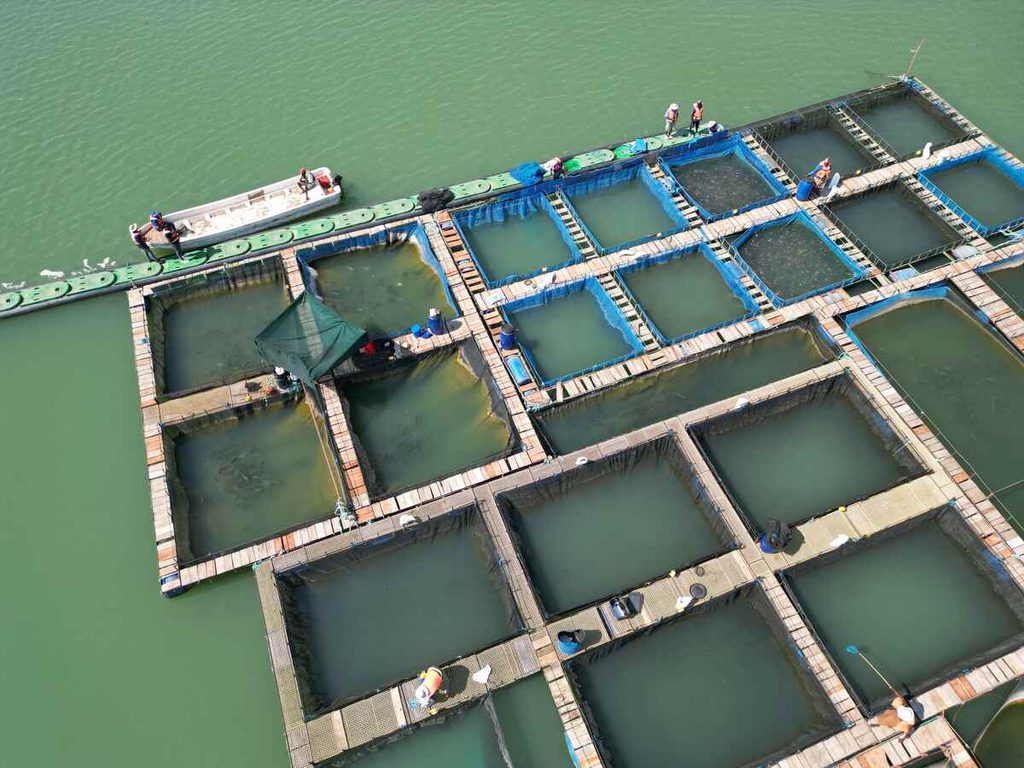
Farmed seafood is produced through aquaculture systems where aquatic species are raised under controlled or semi-controlled conditions. Depending on the species, farming operations can take place in ponds, cages, tanks, or other aquaculture environments.
Aquaculture allows producers to manage factors such as feeding, growth, stocking density, harvesting schedules, and production cycles.
For buyers, one significant advantage is predictability. Farming can potentially provide a more consistent supply throughout the year, making it easier to plan purchasing volumes and maintain regular distribution.
A reliable Seafood Supplier should be able to explain the origin of farmed products, production methods, processing procedures, and quality control measures used prior to export.
Wild-Caught vs Farmed Seafood: Key Differences
The most important differences between wild-caught and farmed seafood relate to supply, consistency, product characteristics, sustainability considerations, and purchasing requirements.
Factor
Wild-Caught Seafood
Farmed Seafood
Source
Natural waters
Aquaculture operations
Supply
Can vary seasonally
Generally more predictable
Production control
Limited
Greater producer control
Availability
Depends on natural stocks and fishing conditions
Based on farming cycles
Product consistency
Can vary
Often more standardized
Sustainability
Depends on fishing practices and stock management
Depends on farming methods
Buyer planning
May require flexibility
Can support planned purchasing
Best suited for
Products where wild origin is important
Buyers prioritizing consistency
Neither option is automatically better for every international buyer. The right choice depends on the buyer’s commercial requirements.
For companies purchasing frozen seafood products, consistency in size, processing specifications, packaging, and availability can be particularly important when planning recurring orders.
Which Has Better Quality: Wild-Caught or Farmed Seafood?
Quality should not be determined solely by whether seafood is wild-caught or farmed.
For an importer, quality is influenced by several factors, including:
Species and product specifications
Harvesting practices
Handling after harvest
Processing conditions
Temperature management
Freezing methods
Hygiene and sanitation
Packaging
Storage
Traceability
Supplier quality-control procedures
A well-managed farmed seafood product can meet strict commercial specifications, while a professionally handled wild-caught product can also provide excellent quality.
Therefore, buyers should evaluate the supplier’s quality-control system rather than assuming one production method is inherently superior.
This is particularly important when selecting a seafood export company, because the exporter’s role can extend beyond sourcing to product inspection, processing coordination, documentation, packaging, and shipment preparation.
Which Is More Sustainable?
Sustainability is one of the most important considerations when evaluating wild-caught vs. farmed seafood.
Wild-caught seafood can be sustainable when fisheries are properly managed, fishing pressure is controlled, and harvesting methods minimize environmental impact. Sustainable fisheries management can help maintain fish populations and protect marine ecosystems.
Farmed seafood can also be produced responsibly. However, sustainability depends on factors such as feed sourcing, water management, farm density, disease control, waste management, and the environmental characteristics of the farming system.
International buyers should therefore ask suppliers for specific information about the origin and production practices of the seafood, rather than treating “wild” or “farmed” as an automatic guarantee of sustainability.
Which Option Provides a More Consistent Supply?
Supply consistency can be particularly important for wholesalers, food manufacturers, restaurant groups, and international buyers.
Farmed seafood can offer an advantage because production is planned around farming cycles. Producers may have greater control over harvesting schedules and volumes.
Wild-caught seafood is more dependent on fishing conditions. Weather, seasonal availability, fishing regulations, quotas, and natural stock levels can influence supply.
However, established exporters can help buyers manage this variability by working with multiple sourcing areas, planning procurement in advance, and communicating expected availability.
A professional Seafood Exporter should also be able to clearly communicate expected production volumes and availability, particularly when buyers require recurring shipments.
What Should International Buyers Consider Before Choosing?
Rather than asking whether wild-caught or farmed seafood is universally better, buyers should start with their own commercial requirements.
1. Target Market
Consumer expectations can differ between markets. Some buyers may specifically require wild-caught products, while others prioritize consistent supply and standardized specifications.
2. Product Specifications
Consider the required species, size, grade, processing format, packaging, and whether frozen or fresh.
This is especially relevant when sourcing multiple seafood export products, as specifications can vary significantly between species and destination markets.
3. Volume Requirements
Large-volume buyers should determine whether the supplier can consistently meet the required quantity without compromising quality.
4. Supply Reliability
Ask how the supplier manages seasonal changes, production fluctuations, and unexpected supply disruptions.
5. Traceability
Buyers should understand where the seafood originates and whether the supplier can provide appropriate traceability information throughout the supply chain.
6. Quality Control
A reliable supplier should have clearly defined procedures covering raw material inspection, processing, storage, and final product checks.
7. Sustainability Requirements
If sustainability is important to the target market, buyers should verify the supplier’s sourcing practices and relevant certifications or documentation.
Why Indonesia Can Be an Important Seafood Sourcing Market
Indonesia’s extensive marine resources and growing aquaculture sector provide international buyers with access to both wild-caught and farmed seafood products.
For companies considering seafood supplier options in Indonesia, the key is not simply finding a supplier offering the lowest price. Buyers should assess sourcing capabilities, processing standards, product consistency, traceability, documentation, and the supplier’s ability to meet international requirements.
Indonesia’s diverse seafood industry also enables exporters to operate across different product categories, depending on species, production methods, processing requirements, and destination markets.
Companies seeking an experienced seafood exporter should therefore consider more than product availability. The supplier’s ability to coordinate sourcing, quality control, documentation, packaging, and international logistics can significantly impact long-term purchasing success.
For buyers evaluating Indonesian suppliers, our guide on sourcing seafood suppliers in Indonesia offers additional considerations for selecting an export partner.
The target species is primarily sourced from fisheries.
You require specific wild-caught product characteristics.
Your purchasing strategy can accommodate seasonal availability.
Choose farmed seafood when:
Consistent supply is a major priority.
You require predictable production volumes.
Standardized product specifications are important.
You need greater control over purchasing schedules.
For many international buyers, the best strategy may not be choosing one category exclusively. A diversified sourcing strategy can combine wild-caught and farmed seafood depending on species, market demand, availability, and purchasing requirements.
The most important decision is therefore choosing a supplier capable of providing the right product, quality, documentation, and supply reliability for your market.
Frequently Asked Questions
Is wild-caught seafood better than farmed seafood?
Not necessarily. Both wild-caught and farmed seafood can provide high-quality products. The better option depends on the species, quality specifications, supply requirements, sustainability expectations, and target market.
Is farmed seafood more consistent than wild-caught seafood?
Generally, farmed seafood can provide more predictable supply because production and harvesting can be planned around aquaculture cycles. Wild-caught supply is more affected by fishing seasons, weather, regulations, and natural stock availability.
Is wild-caught seafood more sustainable than farmed seafood?
Not automatically. Sustainability depends on how the seafood is harvested or produced. Responsible fisheries and well-managed aquaculture operations can both support sustainable seafood production.
What should seafood importers check when choosing between wild-caught and farmed products?
Importers should evaluate product specifications, origin, quality controls, traceability, supply consistency, processing standards, sustainability requirements, certifications, documentation, and the supplier’s ability to meet required volumes.
Can Indonesian seafood suppliers provide both wild-caught and farmed seafood?
Yes. Indonesia has both commercial fisheries and aquaculture production, allowing seafood exporters to source different product categories depending on species, market requirements, availability, and buyer specifications.
Which is better for long-term seafood sourcing?
Neither option is universally better. Long-term sourcing depends on supplier reliability, consistent quality, predictable availability, traceability, competitive commercial terms, and the supplier’s ability to meet changing market requirements.
How can international buyers find a reliable Indonesian seafood supplier?
Buyers should assess the supplier’s sourcing network, processing capabilities, quality-control procedures, traceability, export experience, documentation, certifications, product specifications, and communication before placing a large order.
Every procurement manager who has opened a supplier deck has seen the row of logos on slide 3. BAP, ASC, MSC, BRCGS, HACCP. They are all supposed to answer the one question a buyer actually cares about: can I trust this fishery product to arrive safely, legally, and consistently, shipment after shipment? Of all those marks, BAP is among the most requested by retail buyers and among the most misunderstood by the people quoting against it. This guide explains what Best Aquaculture Practices certification actually certifies, what it deliberately leaves out, and how you can verify any supplier’s claim in about 5 minutes.
What Is BAP Certification, Exactly?
Best Aquaculture Practices is a voluntary third-party certification program developed and run by the Global Seafood Alliance (GSA), formerly the Global Aquaculture Alliance. It is not a government regulation, and no exporter is legally required to hold it. It exists because large buyers wanted an independent way to verify suppliers’ claims about themselves.
What makes BAP unusual among seafood schemes is its coverage. It is the only aquaculture certification program in the world with standards spanning every stage of the farmed production chain: the feed mill, the hatchery, the farm, and the processing plant. Most competing schemes certify one link. BAP can certify all four, which is why it also delivers chain-of-custody traceability between those links rather than a snapshot of a single site.
Certification is not a one-time badge. A producer must pass an annual third-party audit, and any nonconformities identified by the auditor must be corrected before the certificate is issued. That annual cycle is the part buyers should care about most. A certificate proves the site passed a specific audit on a specific date against a specific standard, which is a far narrower claim than “this company is sustainable.”
The Four Stars Are Not a Quality Rating
This is the most common misreading in the entire program, and it costs buyers money. A 4-star product is not better than a 2-star product. The stars describe how much of the production chain has been certified, not how good the end product tastes or how fresh it arrives.
Rating
What is certified
1 star
Processing plant
2 stars
Processing plant + farm
3 stars
Processing plant + farm + hatchery or feed mill
4 stars
Entire chain: processing plant, farm, hatchery, and feed mill
A 4-star designation is the highest achievable and means every facility feeding into that product has passed certification. The number printed on the packaging refers to the processing plant that packed the product before it reached you.
For a buyer, the practical takeaway is that star count is a measure of supply chain visibility. If your risk exposure is concentrated in feed inputs or juvenile sourcing, the difference between 2 stars and 4 stars is meaningful. If you are buying a commodity block where plant-level controls are what matter, 1 or 2 stars may be entirely sufficient, and paying a premium for stars you don’t need is simply a transfer of margin.
Why Does BAP Matter to Seafood Buyers?
Three reasons, in descending order of how often they actually drive a purchase order.
Market access.
More than 200 retail and foodservice companies worldwide source seafood from BAP-certified producers. For many of them, certification is a gate rather than a preference. If you supply those accounts, an uncertified lot does not get a lower price; it gets rejected at the specification stage. Any seafood export company selling into North American or European grocery retail is working within that constraint.
Documented risk transfer.
When a buyer’s own auditor or regulator asks how supplier controls were verified, a current third-party certificate is a far stronger answer than a supplier questionnaire. Producers certified to BAP and the related Best Seafood Practices standards made 7,808 documented improvements to their operations during 2025 alone, and total certified production at plant level exceeded 3.2 million metric tons by the end of that year. That is an audit trail, and audit trails are what protect buyers when something goes wrong.
Credibility with independent benchmarks.
BAP was the first aquaculture certification program recognized by the Global Sustainable Seafood Initiative, which independently verified its alignment with the FAO Technical Guidelines on Aquaculture Certification. For a compliance team that has to defend a sourcing decision internally, external recognition carries more weight than a supplier’s own marketing ever will.
The Four Pillars Behind the Label
Every BAP standard, at every stage of the chain, is built on four pillars.
Environmental responsibility covers habitat conservation, water quality, and effluent management. Social accountability covers human rights, labor law compliance, and worker health and safety, which has become the single fastest-moving area of buyer scrutiny as import authorities tighten enforcement against forced labor in seafood supply chains. Food safety covers the controls that keep pathogens, residues, and contaminants out of the product. Animal welfare covers the husbandry and health management of the stock.
Notice that only one of those four pillars is about food safety. Buyers who treat BAP as a food-it’s-intended-for certificate are using it for roughly a quarter of what it’s intended for, and are usually still running HACCP verification alongside it anyway. The other three pillars are what a certificate buys you that a HACCP plan does not.
Does BAP Apply to Wild-Caught Seafood?
No, and this is where a great many supplier conversations go quietly wrong. The A in BAP stands for Aquaculture. The standard applies only to farmed seafood. If a Seafood Trader offers you BAP-certified wild-caught yellowfin tuna or BAP-certified wild octopus, either the terminology is being used loosely, or the claim is wrong, and it is worth finding out which before a contract is signed.
For wild capture, the Global Seafood Alliance runs a separate program called Best Seafood Practices (BSP), which covers working conditions aboard fishing vessels and responsible practices at processing plants. Alongside it sits the Seafood Processing Standard, the only seafood-specific processing plant standard in the world, which verifies responsible practices at land-based plants, whether the raw material was farmed or caught.
This distinction matters enormously in Indonesia, where a large share of export volume is wild capture rather than aquaculture. A Seafood Supplier handling reef fish, tuna, or cephalopods from Indonesian waters cannot hold BAP certification for that fishery product, no matter how well the plant is run, because the standard does not cover the species pathway. What that supplier can hold is HACCP, GMP, an approved establishment number, and, where the plant qualifies, a processing standard certificate. Judging a wild-capture processor by the absence of a BAP logo is judging it against a test it was never eligible to sit.
How Do You Verify a Supplier’s BAP Claim?
Certificates get photoshopped, expire quietly, and get cited long after a facility has dropped out of the program. Verification takes minutes and should be routine.
Ask for the certificate number and the facility name, not a logo in a PDF. A logo is a graphic; a certificate number is a database key.
Check the Global Seafood Alliance’s certified producers list and confirm the record is current, not expired.
Check the scope. A certificate names specific species and a specific facility. A plant certified for shrimp is not certified for grouper. This is the most common gap between what a certificate says and what a buyer assumes it says.
Confirm that the certified facility is the facility shipping your goods. A trading house may legitimately reference a certified partner plant, but you need to know whose plant is processing your frozen seafood products before the container is sealed.
Ask what non-conformities appeared in the most recent audit and how they were closed. Cooperative suppliers answer this readily. Evasion here tells you more than any certificate.
Build these 5 steps into your onboarding template rather than running them ad hoc. A buyer who verifies every fishery product certificate the same way, every time, catches scope mismatches before they become rejected containers. A buyer who checks only when something already feels wrong is checking too late.
What BAP Certification Does Not Tell You
A certificate is a floor, not a forecast. It does not tell you whether the cold chain was maintained after the product left the plant gate. It does not grade freshness, glaze percentage, or yield. It does not fulfill your own regulatory obligations, including US import filings, and it does not replace your incoming inspection or lab testing regime.
Most importantly, it says nothing about commercial reliability. Certification does not measure whether a supplier hits lead times, communicates when a catch fails, holds pricing through a season, or answers the phone during a claim. Buyers who have been in the category for a decade will tell you that the expensive failures are almost never certification failures. They are communication failures.
There is also a scale bias worth naming. Certification carries real cost in audit fees, documentation systems, and staff time, which means the absence of a logo often reflects a producer’s size and market mix rather than the quality of their controls. Indonesia exported roughly USD 5.95 billion in seafood in 2024, and a substantial share of that volume moved through processors operating rigorous HACCP systems without carrying a consumer-facing certification mark because their buyers never required one. Treating the logo as a proxy for capability filters out competent suppliers and narrows your options precisely when supply tightens.
Certified, Uncertified, or Somewhere in Between
The practical question for a buyer is not “Is this supplier BAP certified?” but “Does this supplier hold the right verification for the product I am buying, and can they prove it?” For farmed shrimp destined for US retail, BAP is often non-negotiable. For wild-caught demersal species from Indonesian waters, the relevant evidence is HACCP implementation, GMP controls, approved establishment status, cold chain documentation, and full catch traceability.
CV Anugerah Bahari Mandiri has exported fishery products from Makassar since 1997 under HACCP and GMP controls, with blast freezing at -40°C and cold storage held below -25°C, serving buyers in more than 10 countries. You can review the full product range or read how our operation is structured before requesting documentation. If your questions are about logistics rather than certification, our breakdown of shipping routes and lead times from Indonesia to Mexico walks through the timeline end-to-end.
Ask any Seafood Distributor you are evaluating about their certificate scope, audit history, and claims record. The ones worth working with will send all three without being chased.
Frequently Asked Questions
What does BAP certification stand for?
BAP stands for Best Aquaculture Practices, a voluntary third-party certification program run by the Global Seafood Alliance covering farmed seafood production.
Is BAP certification mandatory for seafood imports?
No. BAP is voluntary and buyer-driven. Many major retailers require it commercially, but no government mandates it as an import condition.
What is the difference between BAP and MSC?
BAP certifies farmed seafood across the production chain. MSC certifies wild-capture fisheries against sustainability criteria. They cover different production systems entirely.
Can wild-caught seafood be BAP certified?
No. Wild-caught product falls under Best Seafood Practices, a separate Global Seafood Alliance program covering fishing vessels and land-based processing plants.
How often is BAP certification audited?
Annually. Producers must pass a third-party audit each year and close every non-conformity identified before the certificate is issued or renewed.
Does a 4-star BAP rating mean better quality?
No. Stars indicate how much of the production chain is certified, not product quality, freshness, or grade.
How do I check whether a supplier is actually BAP-certified?
Request the certificate number and facility name, then verify the record and its scope against the Global Seafood Alliance certified producers list.
Is BAP certification worth the cost for exporters?
It depends on target markets. For buyers who mandate it, certification is the price of entry. For other channels, HACCP and traceability may suffice.