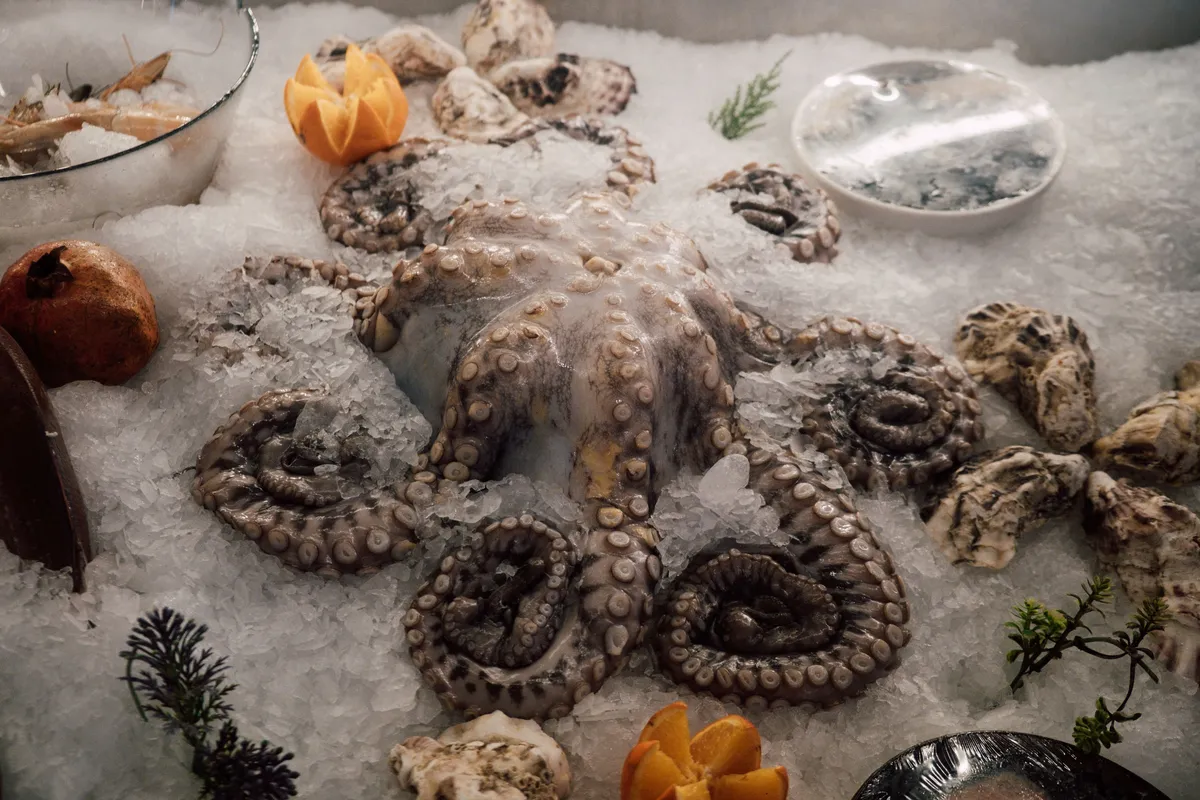
One kilogram of frozen octopus (gross weight, with glaze) usually gives about 450–550 g of cooked octopus. Ice glaze makes up part of the gross weight, and the octopus loses roughly 35–45% of its weight during cooking. This frozen octopus yield is why the lowest price per kilo often doesn’t mean the lowest octopus cost per portion.
This guide shows how to calculate the real cost of every plate, with a worked example, a shrinkage table and a supplier checklist. It is written for restaurant groups, caterers, importers and foodservice distributors who buy frozen octopus from Indonesia.
Why price per kilo misleads octopus buyers
A quote of $7.00 per kg looks the same on paper from every supplier. On the plate, it is not. Three things change what you actually serve:
- Glaze: the protective ice layer that counts toward gross weight but isn’t product.
- Net weight: the octopus you receive after the glaze melts.
- Cooking loss: water and fat that leave the octopus as it cooks.
Chefs think in portions. Buyers think in kilos. The yield calculation connects the two.
The three numbers that decide frozen octopus yield
1. Glaze percentage.
Glaze protects frozen octopus from freezer burn, so some glaze is normal. Excess glaze means you pay octopus prices for ice. If glaze is 20% of gross weight, a 1 kg carton holds only 800 g of octopus. Our guide to frozen octopus size, glaze, net weight and packaging explains how to read these figures on a spec sheet.
2. Net weight.
Always compare quotes on net weight, not gross. Ask whether the price is per kg gross or per kg net.
3. Cooking yield.
Octopus is about 80% water, and much of it is released during cooking. Most kitchens plan on a cooked yield of 55–65% of net raw weight, depending on method and size.
How to calculate octopus cost per portion
Use this formula:

Worked example (illustrative prices, 120 g cooked portion, 60% cooked yield):
| Supplier A | Supplier B | |
| Quoted price per kg (gross) | $7.00 | $7.50 |
| Glaze (share of gross weight) | 20% | 10% |
| Net octopus per 1 kg gross | 800 g | 900 g |
| Real cost per net kg | $8.75 | $8.33 |
| Cost per cooked kg (60% yield) | $14.58 | $13.89 |
| Cost per 120 g portion | $1.75 | $1.67 |
Supplier A looks 7% cheaper per kilo, yet Supplier B is about 5% cheaper per portion. At 1,000 portions per week, that gap is roughly $83 per week, or more than $4,000 a year, before accounting for waste from inconsistent sizing. Prices here are examples only; use your own quotes.
Octopus cooking shrinkage by method
Cooking method changes yield as much as glaze does. These are approximate working ranges based on common culinary practice, so run a test batch in your own kitchen before you fix menu costs.
| Cooking method | Typical weight loss | Cooked yield | Best for |
| Simmer or boil | 35–45% | 55–65% | Salads, tapas, ceviche-style dishes |
| Pressure cooker | 30–40% | 60–70% | High-volume kitchens |
| Sous vide (low temperature) | 25–35% | 65–75% | Plated, premium dishes |
| Braise | 40–50% | 50–60% | Stews, rice dishes |
Size also matters. Larger octopus tends to cook more evenly and slice cleaner, while very small pieces can overcook quickly. Our guide to frozen octopus types helps you match size and form to the dish.
Thawing and handling: protect your yield
Poor thawing wastes product through drip loss and tough texture. Follow this checklist:
- Thaw in a refrigerator at 0–4°C, usually overnight and up to 24 hours for larger pieces.
- For faster thawing, use a sealed bag in cold running water. Never thaw at room temperature.
- Do not refreeze thawed octopus.
- Pat dry before cooking and cook within 24 to 48 hours of thawing.
- Store unopened cartons at -18°C or colder, away from freezer walls and door areas.
Packing format also affects handling. IQF octopus versus block-frozen octopus differ in how easily you can portion, thaw, and reseal, which affects daily kitchen waste.
Seven questions to ask any frozen octopus supplier
Before you order, request this in writing:
- Is the price per kg gross or net?
- What is the glaze percentage, and what is the tolerance?
- What is the size grade, and how many pieces per kg?
- Is the product IQF or block frozen, and how is it packed?
- What are the carton weight and number of cartons per container?
- Can you provide a quality control report and samples before shipment? See our seafood quality control guide.
- What are the origin and traceability documents? See our traceable seafood exporter overview.
A supplier who answers these clearly is easier to forecast, audit and reorder from.
Buy frozen octopus from Anugerah Bahari Mandiri
CV Anugerah Bahari Mandiri (ABM) is an Indonesian seafood exporter in Makassar, supplying frozen octopus to buyers in the US and Mexico. We quote on stated net weight, glaze and size grade so you can compare real portion cost, not just a headline price.
When you send an inquiry, include your destination, preferred size grade, packing format and target volume. We will reply with a specification sheet and a quote. Read our frozen octopus wholesale and export supplier page, or see how Indonesian octopus compares with Mexican supply. For landed cost, our seafood import cost guide shows what to budget on top of the product price.
Ready to price your next container? Request a quote and sample from CV Anugerah Bahari Mandiri today.
FAQ
How much cooked octopus do you get from 1 kg of frozen octopus?
About 450–550 g. This assumes 10–20% glaze on gross weight and a cooked yield of roughly 60%. Your result depends on the cooking method and the size of the octopus.
How much does octopus shrink when cooked?
Octopus typically loses 30–45% of its raw weight when cooked, depending on method. Sous vide loses the least. Braising and long boiling lose the most.
What is a normal glaze percentage for frozen octopus?
Glaze levels vary by supplier and packing format. Ask for the exact figure and tolerance in writing, and compare quotes on net weight so glaze does not distort price.
Is IQF or block-frozen octopus better for yield?
Neither is better for every kitchen. IQF pieces are easier to portion and use without thawing a whole block. Block packs can suit high-volume prep. Compare the two on net weight, glaze and waste in your own workflow.
How do I calculate octopus cost per portion?
Divide the gross price per kg by the net-weight ratio and the cooked-yield ratio. Then multiply by your portion weight in kilograms. The worked example above shows each step.
Can I request a sample before ordering a container?
Yes. Send your destination, size grade, packing format and target volume through our contact page, and we will advise on samples and the quoting process.