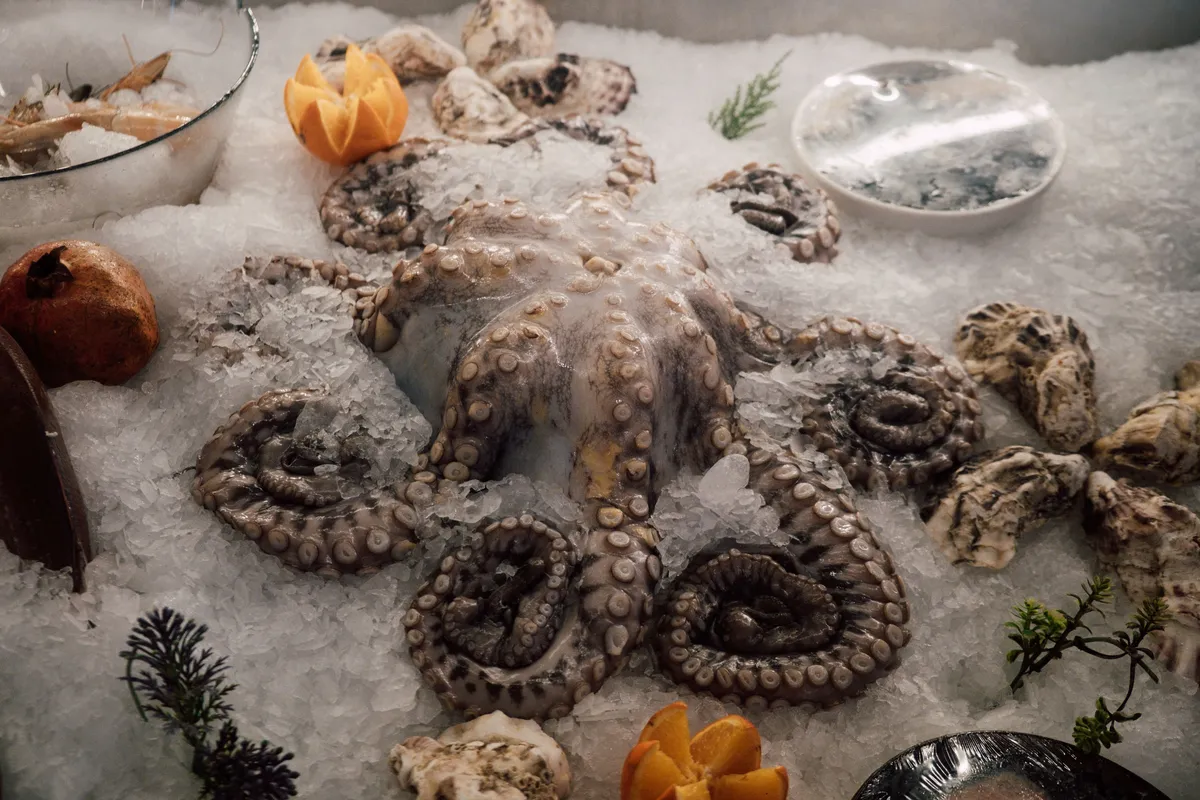
Buyers can choose between four formats. Frozen whole octopus is the raw, lowest-prep option. Whole cleaned octopus arrives with eyes, beak, and viscera already removed. Octopus ball type is a cleaned animal shaped into a compact round. Yucatan octopus is a cleaned presentation tied to the Mexican market. Indonesian processors can supply each in IQF, semi-IQF, or block-frozen formats.
One wrong cut can quietly eat your margin. Order raw octopus, and you pay for viscera, eyes, and beak you will never serve; pick the wrong cleaned style, and your portions, plates, or Mexican-market customers will not match what they expect. With global octopus exports at just 283,577 tonnes in 2020, every kilo has to earn its place. This guide breaks down the types of frozen octopus importers buy most often, from whole round to ball-type and Yucatan-style, with trade data, yield tips, and a checklist to use before you request a quote from an Indonesian processor.
Why Octopus Format Matters in a Tight Market
Octopus is a supply-limited product, and the numbers show it. FAO’s GLOBEFISH service reports that total octopus exports reached only 283,577 tonnes in 2020, an 11.8% decline from 2019. Demand is concentrated in a few markets: South Korea imported 72,294 tonnes, Spain 49,970 tonnes and Japan 44,873 tonnes. Korean imports then slipped from 73,157 tonnes in 2021 to 65,380 tonnes in 2022, while Japan rebounded to 38,333 tonnes. Global octopus landings were close to 375,000 tonnes in 2021.
When supply is tight and prices are volatile, the wrong format choice costs real money. Knowing the types of frozen octopus available lets you buy only the processing you need, rather than paying for labor you will not use or discovering at your dock that you must clean every unit yourself.
Trade data also explains why origin diversity matters. Market research published by ResearchAndMarkets lists Mexico, Spain, the Philippines, India, Senegal, and Indonesia among the leading octopus exporters, with the United States, Italy, and Spain among the major importers. A spread of origins protects buyers from one poor season. For Indonesian processors, it means competing on consistency: accurate grading, stable freezing and clear paperwork matter as much as the cut itself.
Frozen Whole Octopus: The Raw Starting Point
Our frozen whole octopus, also known as “whole round,” offers a versatile option for seafood buyers seeking Octopus vulgaris in its original, uncleaned form. Available alongside our cleaned octopus varieties, it gives importers and distributors the flexibility to choose the product format that best suits their processing and business needs. Explore our octopus products to learn more.
Best for: re-packers, processors and buyers with their own cleaning line who want the lowest price per invoiced kilogram and full control over trimming.
Watch out for: yield. Removing viscera, eyes, and beak reduces the pack’s weight, so the net edible weight is lower than the invoice weight. You also need labor, water, and waste handling at destination. Ask for size grading, such as pieces per kilogram, to keep portions consistent.
Whole Cleaned Octopus: Ready for the Kitchen
Whole cleaned octopus has been gutted and trimmed at origin, then washed and frozen. Eyes, beak, and viscera are typically gone, so the unit goes straight from thawing to cooking.
Best for: restaurants, caterers and wholesalers who want uniform, kitchen-ready pieces and less waste at the back door.
Watch out for: the price per kilogram is higher than for raw round, so compare the cost per usable kilogram, not the invoiced kilogram. Freezing soon after cleaning protects texture, and IQF lets you pull only what a service needs. Cold-chain discipline matters here; see how exporters protect it in our Makassar-to-US cold chain guide.
Octopus Ball Type: Compact and Uniform
Octopus ball type is a cleaned octopus whose head and arms are formed into a compact round before freezing. Because every unit has a similar shape, portions are easier to count and weigh, and the units stack efficiently in a master carton.
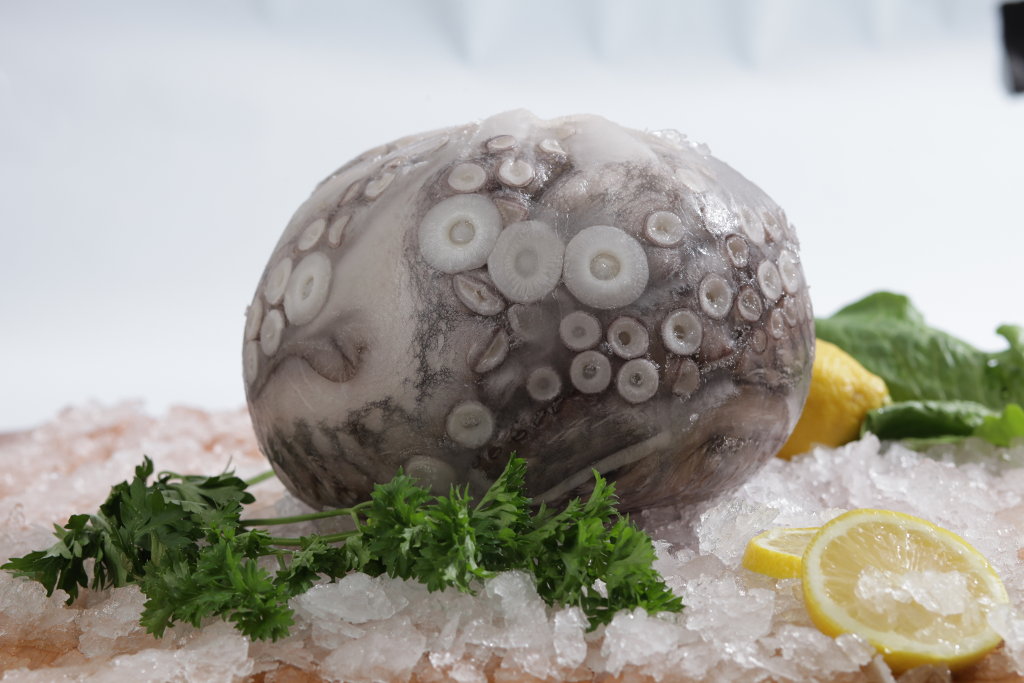
Best for: foodservice and retail buyers who cook the octopus whole, then slice it for tapas, salads, or grills, and who sell or pack by count per kilogram.
Watch out for: agree on the shape and size spec in writing. A neighboring option, the flower type, fans the arms outward instead; AB Mandiri lists both cleaned shapes, so choose by how the product will be plated.
Yucatan Octopus: Built for the Mexican Market
Yucatan octopus is a cleaned presentation associated with the octopus trade of Mexico’s Yucatán region and the buyers who source for it. Mexico is one of the best-known names in the octopus market, and Indonesian suppliers now help fill part of the Pacific supply gap. We explain that shift in Octopus Suppliers for Mexico.
Best for: importers and distributors serving Mexican and Latin American menus who want a familiar look on the plate.
Watch out for: trimming, arm length, and grading can vary between buyers. Ask for a written spec sheet and sample photos to ensure the Yucatan style you receive matches what your customers expect.
Side-by-Side Comparison
| Format | Prep at your site | Best for | Main trade-off |
| Frozen whole octopus (whole round) | High | Re-packers, processors | Lower yield, more labor |
| Whole cleaned octopus | Low | Restaurants, wholesalers | Higher price per kg |
| Octopus ball type | Low | Counted portions, retail packs | Shape spec must be agreed |
| Yucatan octopus | Low | Mexican-style menus and markets | Spec varies by buyer |
How to Choose the Right Type
Work backward from the end use. Three questions settle most orders.
- Who does the cleaning? If you have staff and a wash line, raw round saves money. If not, pay the processor to do it.
- How is it sold? Counted portions favor ball type; weight-based wholesale suits whole cleaned.
- Which market are you serving? Spain, Portugal, Korea, Japan, and Mexico each lean toward different presentations, so confirm what your customers expect.
Then compare freezing methods. IQF provides free-flowing units you can portion, while block-frozen is a bulk-friendly option. Whatever you pick, judge the types of frozen octopus you buy by cost per usable kilogram: divide the invoice price by the yield you expect after thawing and trimming.
Plan Logistics and Storage Before You Order
Format affects shipping as much as cooking. Ask each supplier for carton weight, units per carton, and how many cartons fit in a 20-foot or 40-foot reefer container. Uniform shapes, such as ball-type loads, are predictable, which simplifies freight quotes and warehouse counts. Confirm whether the supplier uses IQF, semi-IQF, or block freezing, because that choice changes how easily you can portion the stock.
Once the container lands, keep octopus at a steady deep-freeze temperature and avoid repeated thaw and refreeze cycles, which damage texture and raise safety risks. Thaw slowly in a refrigerator, inside the original packing, and cook promptly.
Quality Checks on Arrival
Inspect every delivery against the spec sheet. Look for intact cartons, minimal ice crystals or freezer burn, consistent size within the agreed grade, firm skin without discoloration, and a clean sea smell. Record batch codes so you can trace any issue back to its source. Indonesia has built a government-backed traceability system, which we explain in How Indonesia Became the World’s Most Traceable Seafood Exporter. Reject or flag any shipment that shows signs of temperature abuse, and document it with photos the same day.
What to Ask a Seafood Supplier in Indonesia
Indonesia is a recognized origin of octopus, and the country shipped USD 5.95 billion in seafood in 2024, as covered in our export documents checklist. Before you commit, ask any seafood supplier in Indonesia these questions:
- Which species of octopus and which fishing area does it come from?
- How is it frozen, and at what temperature?
- Which food-safety standards apply, such as HACCP and GMP?
- Can you provide a spec sheet, grading, and sample photos?
- What export documents and traceability records come with each shipment?
CV Anugerah Bahari Mandiri, a seafood distributor in Indonesia based in Makassar, has exported fishery products since 1997 to more than 10 countries, including the United States, China, South Korea, and Singapore. Its products are frozen at −40 °C after cleaning, and quality control follows HACCP and GMP, with metal detection on the line. If you are comparing Indonesian seafood suppliers for long-term supply, read the Indonesian fresh and frozen seafood export guide and browse the full range of frozen seafood products in Indonesia on the products page. You can also learn more about the company.
Match the Cut to the Customer
Choose frozen whole octopus for cost control and in-house processing; whole, cleaned for speed and consistency; ball type for countable portions; and Yucatan style for Mexican-market presentation. The best of the types of frozen octopus is simply the one that fits your kitchen, your customers, and your margin.
Ready to compare specs and prices? Contact CV Anugerah Bahari Mandiri to request samples and a quote for your next octopus order.
Frequently Asked Questions
What is frozen whole octopus?
Frozen whole octopus is octopus frozen as landed, usually whole round, before cleaning. Buyers clean and trim it themselves, trading extra labor for a lower price per invoiced kilogram.
What is whole cleaned octopus?
Whole cleaned octopus has eyes, beak and viscera removed at the processor, then is washed and frozen. It arrives kitchen-ready, so you save labor and cut waste.
What is octopus ball type?
Octopus ball type is a cleaned octopus whose head and arms are formed into a compact round before freezing, giving uniform units that are easy to count, weigh and pack.
What does Yucatan octopus mean?
Yucatan octopus is a cleaned presentation linked to Mexico’s Yucatán octopus trade. Trimming specifications vary by buyer, so request a written spec sheet and sample photos first.
Should I choose IQF or block frozen octopus?
IQF freezes each octopus individually, so you can portion what you need. Block freezing packs units together, which suits bulk buyers. AB Mandiri offers IQF, semi-IQF and block formats.
Which octopus does AB Mandiri supply?
AB Mandiri lists Octopus vulgaris, offered as frozen whole round, whole cleaned ball type, flower type and Yucatan type, in IQF, semi-IQF or block-frozen formats.
How do I request a quote?
Send your preferred format, size grade, volume and destination through the contact page at abmandiri.com. The team replies with specifications, samples and pricing for your octopus order.