The United States is the world’s single largest seafood-importing nation, spending an estimated $25.5 billion on imported seafood in 2023, a level that held firm through 2024 despite global trade headwinds, according to the USDA Economic Research Service. Within that enormous market, one origin story is growing faster than nearly any other: Indonesia.
In 2024, Indonesia was the fourth-largest seafood supplier to the US, accounting for 7.9% of the US’s total seafood import value, according to USDA ERS data. Meanwhile, total Indonesian seafood exports to the US reached USD 1.9 billion that year, making the US by far Indonesia’s largest export destination, ahead of China ($1.24 billion) and all ASEAN markets combined ($854 million), as reported by SeafoodSource.
For US importers, food service operators, and retailers searching for a reliable seafood exporter with consistent supply, competitive pricing, and genuine product diversity, Indonesia has never been a more compelling source. This article breaks down exactly why, backed by data from the FAO, USDA, and NOAA, and explains how sourcing from an established seafood supplier in Indonesia, like CV Anugerah Bahari Mandiri (AB Mandiri), delivers a real commercial advantage.
Indonesia: The World’s Second-Largest Fishing Nation
To understand Indonesia’s growing dominance in US seafood import channels, start with the production fundamentals.
According to the FAO’s 2024 State of World Fisheries and Aquaculture (SOFIA) report, Indonesia accounts for 10% of global fisheries and aquaculture production, placing it second only to China. The country produces approximately 22 million metric tons of fish and seafood annually across wild capture and aquaculture systems combined.
For quality-conscious US buyers, a key detail matters: Indonesia is the world’s second-largest wild-capture fisheries nation by volume, accounting for 8.6% of global wild catch according to FAO FishStat 2024. With 17,500+ islands and the world’s third-longest coastline, Indonesia’s marine fisheries operate across exceptionally biodiverse waters — particularly in the eastern archipelago, including Sulawesi and Maluku, where species variety is unmatched anywhere in the Indo-Pacific.
Indonesia is also the world’s largest tuna-producing country, supplying approximately 16% of the global tuna catch, making it the primary source for US canneries and food service distributors seeking skipjack, yellowfin, and albacore.
As a seafood export company based in Makassar, South Sulawesi, AB Mandiri sources directly from these fisheries, offering US buyers access to one of the world’s most productive marine regions through our complete range of frozen fishery products.
Why US Buyers Are Turning to Indonesian Seafood Now
Retail Demand for Frozen Seafood Products Has Permanently Shifted
Post-pandemic consumer habits have reshaped the US seafood market. Demand for frozen seafood products surged during COVID-19 lockdowns, and that structural shift has held. The FMI Power of Seafood 2025 report confirms that convenience-format frozen seafood remains a primary growth category at US retail, driven by value-conscious shoppers and health-oriented millennials and Gen Z consumers.
Indonesian frozen seafood exporters are built for this format. The country’s processing sector has invested heavily in IQF (individually quick-frozen), semi-IQF, and block-frozen production over the past decade, delivering specification-matched, portion-controlled formats that US retailers and distributors require. AB Mandiri’s facility uses ABF blast-freezing at -40°C and -20°C cold storage, maintaining product integrity from the vessel to the export container, as US importers expect.
Indonesia’s Species Range Directly Fills US Supply Gaps
The US seafood import market’s dependence is concentrated in specific categories where domestic production is structurally insufficient. Indonesian seafood export products fill many of those gaps directly:
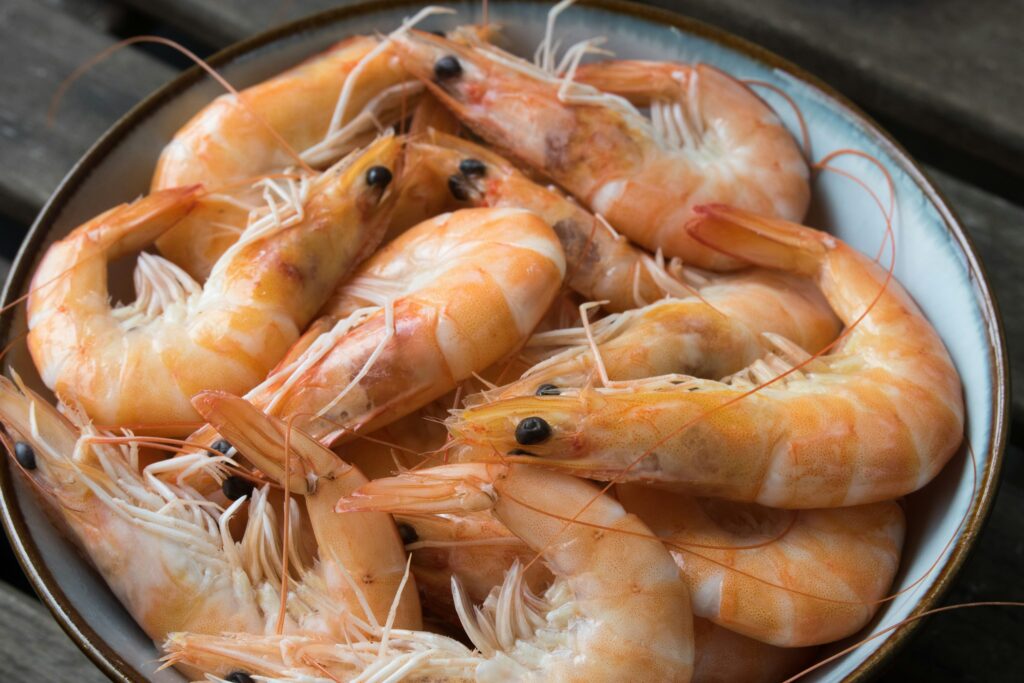
Shrimp: Indonesia is a top-four US shrimp supplier. US shrimp imports exceed 1.3 billion pounds annually (NOAA). Indonesian shrimp exports to the US hit 14,458 MT in May 2025 alone, up 25% year-on-year, as US importers accelerated purchasing ahead of tariff changes.
Tuna: As the world’s top tuna-producing nation, Indonesia supplies US canneries and food service distributors with skipjack, yellowfin, and albacore in consistent volume and quality.
Cephalopods: Indonesian squid and octopus have strong traction in US ethnic retail and food service, particularly in markets with large Hispanic and Southeast Asian-American populations, a growing demographic segment driving import demand.
Pelagic fish: Mackerel, sardines, ribbon fish, flying fish, and Spanish mackerel from Sulawesi’s waters are in high demand among US distributors and processors serving restaurant chains and ethnic grocery retailers.
Milkfish and demersal species: Growing US demand from Filipino, Indonesian, and broader Southeast Asian-American communities is driving steady import growth in these species.
As a seafood supplier operating directly at the source in South Sulawesi, AB Mandiri offers US buyers access to all of these categories through a single supply relationship, reducing vendor complexity and logistics overhead. Contact our export team to discuss your specific volume and specification needs.
Indonesia vs. Competing Origins: What US Buyers Need to Compare
US buyers typically spread seafood orders across multiple Asian origins. Here’s how Indonesia compares on the metrics that drive sourcing decisions:
| Factor | Indonesia | Vietnam | India | Thailand |
| US import tariff (2025 baseline) | 19% | 20% | 25% | 20% |
| Wild-catch global rank (FAO 2024) | 2nd | 7th | 3rd | Outside top 7 |
| Tuna supply to US | #1 globally | Minimal | Minimal | Moderate |
| Shrimp supply to the US | Top 4 | Top 4 | #1 | Top 4 |
| Species diversity | Very high | High | Moderate | Moderate |
| Cephalopod supply | Major exporter | Moderate | Moderate | Moderate |
| Archipelago cold-chain access | Improving rapidly | Strong | Strong | Strong |
Source: USDA ERS (tariff data, import shares), FAO SOFIA 2024 (production rank), SeafoodSource (trade flows). Tariff rates reflect April 2025 announcements and are subject to ongoing US-Indonesia trade negotiations.
Indonesia’s 19% tariff is lower than India’s 25% and comparable to Vietnam and Thailand. More critically, Indonesia’s species portfolio, particularly tuna dominance and deep-water pelagic diversity, means no single competing origin can fully substitute for Indonesian supply across all product categories.
AB Mandiri: A Trusted Seafood Distributor and Exporter in South Sulawesi
CV Anugerah Bahari Mandiri is a Makassar-based seafood export company and processor specializing in wild-caught, freshly frozen fishery products for international buyers. Located in South Sulawesi, the gateway to Indonesia’s richest eastern marine zones, AB Mandiri provides direct source-to-export supply for US distributors, retailers, and food service operators.
Our seafood export products cover six major categories:
| Category | Species | Export Formats |
| Pelagic fish | Ribbon fish, flying fish, mackerel, sardine, Spanish mackerel | IQF, semi-IQF, block frozen |
| Tuna | Skipjack, yellowfin, albacore | Whole round, loin, steak |
| Milkfish | Chanos chanos | Whole round, deboned, butterfly |
| Demersal fish | Grouper, snapper, Emperor fish | Whole round, Fillet & WGG/WGGS |
| Cephalopods | Squid, octopus, Cuttlefish | IQF, block frozen, cleaned |
All products are processed on our ABF blast-freeze line at -40°C. We accommodate custom specifications, packaging, and labeling requirements for US import channels.
What to Know Before You Source: A Practical Guide for US Importers
Whether you’re a seafood trader sourcing for the first time from Indonesia or an established importer expanding your supplier base, here are four things to understand before placing your first order:
1. Traceability documentation is now mandatory. Indonesia’s Regulation 32/2024 requires all exporters to use the STELINA digital traceability system, thereby establishing a documented chain of custody from the vessel to the container. This aligns with US FDA import transparency requirements.
2. Tariff classification matters. A 19% baseline applies in 2025, but rates vary by HS code and product form (whole vs. fillet, raw vs. cooked). Work with a licensed US customs broker to ensure your product is correctly classified before ordering. The US-Indonesia trade framework announced in July 2025 may reduce these rates further upon ratification.
3. Cold-chain specification is non-negotiable. Insist on ABF or comparable blast-freeze technology and documented cold-chain maintenance. AB Mandiri’s -40°C/-20°C standard meets US import requirements and minimizes quality degradation risk.
4. Lead times follow fishing seasons. Some species have seasonal availability windows. AB Mandiri maintains strategic frozen inventory to support year-round supply, but early-season planning improves pricing and availability.
Conclusion
Indonesia’s rise as the US market’s most competitive seafood source is structurally driven by second-rank global production volume, unmatched tuna dominance, growing shrimp output, and a government-backed export program. With USD 1.9 billion flowing from Indonesian docks to US ports in 2024, and shrimp shipments up 25% year-on-year through mid-2025, the data from NOAA, USDA, and FAO is unambiguous.
For US importers and distributors ready to expand or diversify their relationships with frozen seafood exporters, CV Anugerah Bahari Mandiri offers direct-source supply from South Sulawesi, one of Indonesia’s most productive marine regions, across shrimp, tuna, pelagic fish, milkfish, demersal species, and cephalopods.
FAQ Section
What makes Indonesia a top seafood exporter to the US?
Indonesia is the world’s second-largest wild-catch fishery nation, supplying 7.9% of US seafood imports by value, USD 1.9 billion in 2024 alone.
What frozen seafood products can I source from Indonesia?
Indonesian frozen seafood exports include shrimp, tuna, cephalopods, mackerel, milkfish, sardine, ribbon fish, and demersal species in IQF, block-frozen, and semi-IQF formats.
What is a seafood supplier in Indonesia?
A seafood supplier in Indonesia is a licensed Indonesian company that sources, processes, and exports fresh or frozen fishery products to international buyers.
What is the difference between a seafood exporter and a seafood distributor?
A seafood exporter ships products from Indonesia to international markets. A seafood distributor receives imported seafood and redistributes it within the destination country.
Is Indonesian seafood subject to US tariffs?
Yes. A 19% US baseline tariff applied to Indonesian seafood in 2025, lower than India’s 25% and comparable to Vietnam’s 20%.
How does AB Mandiri ensure product quality for export?
AB Mandiri uses ABF blast-freezing at -40°C and -20°C, and cold storage, to process wild-caught fishery products from fresh-from-the-ocean to export-ready condition.
How do I contact an Indonesian seafood export company?
Contact AB Mandiri at abmandiri.com/contact-us for pricing, product specifications, minimum orders, and export documentation for US buyers.
What is a fishery product?
A fishery product is any edible product sourced from fish, shellfish, or other aquatic animals, wild-caught or farmed, sold fresh, frozen, or processed.