A single off-colour loin can sink a night’s covers. For sushi bars, omakase counters, and modern seafood kitchens across the United States and Mexico, yellowfin tuna is a signature ingredient, and the gap between a brilliant ruby slice and a dull, mushy one is decided long before the fish reaches your cutting board. It is decided at procurement. Getting it right means writing a precise specification and partnering with a seafood supplier in Indonesia that can hit that specification on every container, every month. This guide lays out exactly what US sashimi-grade buyers should demand, the data behind the sourcing decision, and how to vet a partner who can deliver.
What makes a yellowfin tuna loin truly sashimi-grade?
“Sashimi-grade” is a commercial standard, not a legal one, which is precisely why your written specification matters. At the top end, a sashimi-grade yellowfin loin shows a clean, translucent red to deep pink color, firm and elastic muscle that springs back to the touch, a fresh sea aroma with no sourness, and minimal connective tissue or bloodline in the saleable portion. Graders typically sort yellowfin into a top sashimi tier, a mid tier for crudo and poke, and a lower tier destined for cooking. The factors that move a fish between tiers are color, fat content, texture, and clarity, plus the absence of “yake,” or burnt tuna, a condition caused by heat and stress at harvest that leaves the flesh dull and acidic.
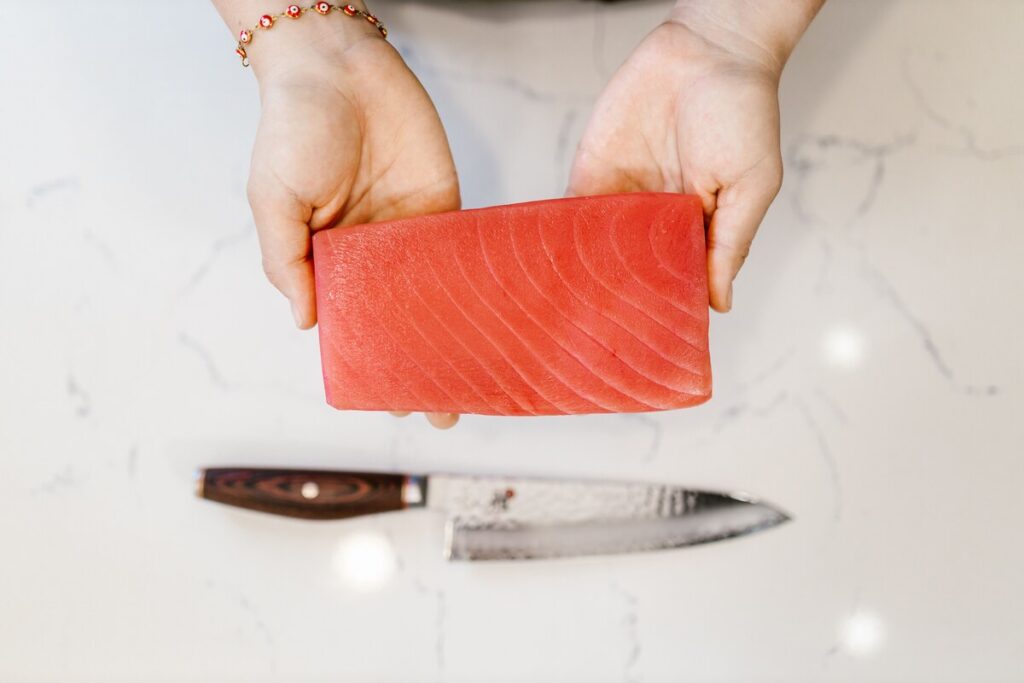
For a buyer, the lesson is to never order on the word “sashimi-grade” alone. Define the tier, the color range, the acceptable bloodline trim, and the rejection criteria in writing, so both you and your supplier are measuring the same thing.
Which specifications should US buyers put in writing?
A strong yellowfin loin specification reads like an engineering drawing. Start with the cut. Decide whether you want full natural loins, centre-cut loins, or block-ready saku, and specify trim level: skin-off, bloodline removed, and any silver skin or belly handling. Set a target weight band per piece, for example, 1 to 3 kilograms, so portion yields stay predictable across deliveries.
Then define the quality controls. State the grade tier and a reference color standard. Specify the freezing method and core temperature, the glaze percentage for frozen product, and the packaging, usually individually vacuum-sealed pieces in master cartons. Add the documentation you require, including catch and harvest records, species verification as Thunnus albacares, and lot traceability. Finally, write your rejection thresholds: maximum histamine on receipt, maximum thaw drip, and visual defect tolerances. A serious seafood supplier in Indonesia will welcome this level of detail, because a clear spec protects them as much as it protects you. Vague orders are where disputes and rejected loads begin.
How should you handle tuna grades, color, and the CO-treatment question?
Color is where many buyers get burned. Fresh yellowfin oxidizes from bright red toward brown over time, so some processors treat loins with carbon monoxide or “tasteless smoke” to lock in a permanent cherry-red appearance. The United States permits CO-treated tuna, while the European Union and Japan prohibit it, meaning the treated product can appear fresher than it is. This is a procurement decision you must make consciously. If you buy untreated loins, you accept natural color variation in exchange for honest visual cues about freshness. If you buy treated loins, you gain shelf appeal but lose color as a spoilage indicator, so you lean harder on temperature logs and histamine testing.
Whichever you choose, put it in the spec and require disclosure. Ask your supplier to clearly label treated and untreated lots, and to make CO status a line item on every certificate of analysis. Transparency here is a mark of a trustworthy frozen seafood exporter, and ambiguity is a red flag.
Why does the cold chain make or break sashimi-grade loins?
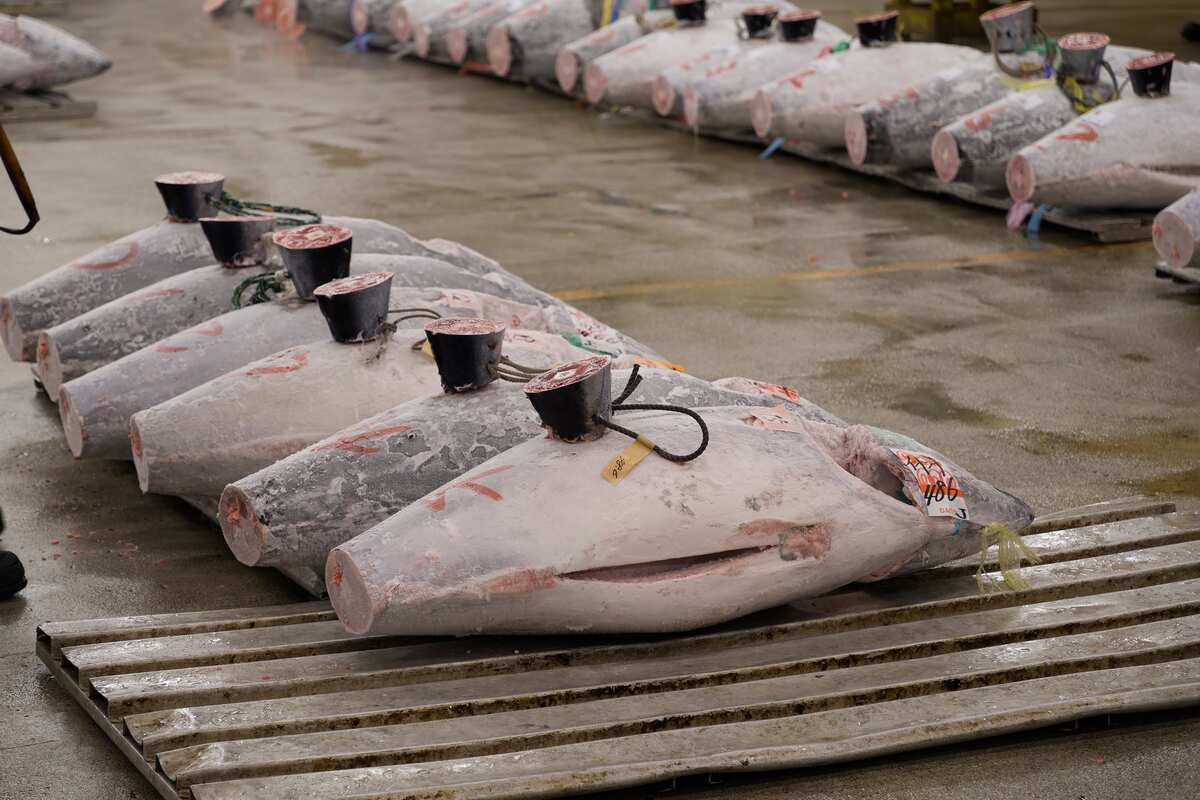
Sashimi tuna lives or dies by temperature. Ordinary frozen seafood holds around minus 18 degrees Celsius, but sashimi-grade yellowfin is typically super-frozen to roughly minus 60 degrees Celsius, a deep-freeze standard that halts the enzyme activity and color loss that would otherwise ruin the loin. Once a fish is super-frozen and held cold, it can retain sashimi quality for many months. Break that chain, even briefly, and the damage is permanent.
This matters because of a hard food-safety fact: histamine, the toxin behind scombroid poisoning, cannot reliably be removed by washing, freezing, or heating once it has formed, according to the US FDA. You cannot fix a temperature-abused loin downstream. That is why your specification should require an unbroken super-frozen chain from the processing plant to the port, documented temperature monitoring during transit, and a glaze and packaging regime that protects the product from freezer burn. The cold chain is not a logistics afterthought. It is the core of the product.
What food-safety limits must your supplier meet?
Histamine control is the headline safety issue for tuna, and the bar has risen. The FDA’s long-standing guidance treated 50 parts per million as the histamine action level, but a 2024 final compliance policy guide lowered the decomposition criterion to 35 ppm in a single sample unit and adopted a 200 ppm maximum hazard limit, as reported by the FDA. For a US buyer, that means your supplier’s HACCP plan should target well below the action level, with on-board chilling, rapid processing, and histamine testing built into every lot.
Ask for the standard supporting paperwork: a HACCP plan covering scombrotoxin formation, histamine test results for each lot, and proof of food safety certification. Indonesia’s tuna sector is built for this scrutiny, operating well over 150 tuna processing plants, many of which are HACCP- and internationally certified, according to industry data. The presence of certification is your baseline, not your differentiator. What separates suppliers is whether they can produce the records on demand, shipment after shipment, without delay.
Why source sashimi-grade yellowfin from Indonesia?
The sourcing logic is strong, and the numbers back it up. Indonesia is the world’s largest tuna producer, supplying roughly 15 percent of the global catch, according to SeafoodSource, citing the country’s Ministry of Marine Affairs and Fisheries. Its waters across the Indian and Pacific oceans yield abundant yellowfin, and its processing industry has matured specifically to serve premium fresh and frozen markets.
The trade flows confirm the relationship. The top tuna export flow in 2023 was from Indonesia to the United States, worth almost USD 159 million, per Tridge trade data, while the United States stands as the single largest tuna importer in the world, taking around 52 percent of global tuna shipments, according to Volza. In other words, the Indonesia-to-US lane for tuna is already one of the most established in the global seafood trade. For a US restaurant buyer, that maturity translates into deeper supply, more experienced exporters, and processors who already understand American documentation and quality expectations. Partnering with a proven seafood supplier, Indonesia’s operation plugs you into a lane built for exactly your product.
How do US and Mexican buyers lock in a consistent supply?
Demand for high-quality tuna is climbing across North America, not only in the United States but in Mexico’s fast-growing sushi and contemporary dining scenes. Buyers on both sides of the border increasingly compete for the same premium loins, making supply consistency a strategic rather than seasonal concern. The way to win is to move from spot buying to a planned program.
Lock in a rolling forecast with your supplier so production and freezing capacity are reserved against your volume. Standardize one master specification across all your outlets, whether they sit in California, Texas, or Mexico City, so every kitchen receives identical product. Agree on consolidated logistics that maintain the super-frozen chain across the longer routes required by North American distribution. A supplier who can serve both US and Mexico accounts under a single spec gives multi-location operators a real advantage: one standard, one paper trail, one quality story to tell guests. Consistency, not the lowest unit price, is what protects your menu and your reputation over a full year.
How do you vet a seafood supplier in Indonesia?
Vetting is where procurement becomes a partnership. When you assess a seafood supplier in Indonesia, look past the price list and test five things. First, traceability: can they document the catch from harvest to your port, including vessel and area? Second, food safety: do they hold current HACCP certification and produce per-lot histamine results without prompting? Third, cold-chain integrity: can they prove super-frozen handling and monitored transit temperatures? Fourth, consistency: do they have the processing capacity and track record to repeat your exact spec across many containers? Fifth, responsiveness: when your customs broker needs one more document at the worst possible moment, how fast do they answer?
This is where CV Anugerah Bahari Mandiri fits the brief. Based in Makassar, South Sulawesi, the company processes and exports fresh and frozen fishery products caught in Indonesian waters and works with buyers whose specifications must meet inspection requirements. For a US or Mexico restaurant group building a reliable yellowfin program, a focused exporter beats stitching together one-off lots from sources that cannot stand behind their own product.
Sourcing yellowfin with confidence
Sashimi-grade procurement rewards precision. Write a specification that defines the cut, grade, color, CO status, freezing temperature, and food-safety limits in black and white, then choose a partner who treats that document as a promise rather than a suggestion. Get those two things right, and the rest of the relationship becomes routine: predictable yields, clean inspections, and loins your chefs are proud to serve. To start a spec-driven yellowfin program with a dependable seafood supplier in Indonesia, request a quote from CV Anugerah Bahari Mandiri.
Frequently Asked Questions
What does sashimi-grade yellowfin actually mean?
It is a commercial quality standard, not a legal one, describing tuna with clean color, firm texture, and fresh aroma suitable for raw service. Always define the tier in writing.
What temperature should sashimi-grade tuna be frozen at?
Sashimi-grade yellowfin is typically super-frozen to around minus 60 degrees Celsius, far colder than standard frozen seafood, to preserve color and texture and prevent histamine formation.
Is CO-treated tuna legal in the United States?
Yes. The US permits carbon monoxide-treated tuna, while the EU and Japan prohibit it. Require suppliers to disclose whether lots are treated or untreated on every certificate.
What is the histamine limit for tuna?
The FDA lowered its action level for decomposition to 35 ppm in a single sample and set a 200 ppm hazard maximum. Once formed, histamine cannot be removed by freezing or cooking.
Why source yellowfin tuna from Indonesia?
Indonesia is the world’s largest tuna producer, at roughly 15 percent of the global supply, with a mature processing sector and an established export lane to the United States.