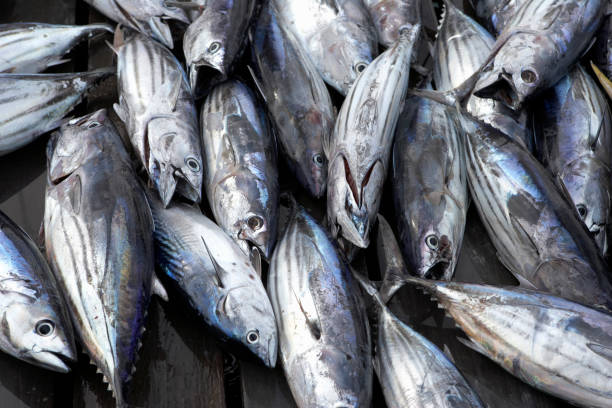
North American canneries rely on one thing: the line keeps moving. Every shift and every can depends on a steady supply of raw tuna. For chunk light cans found from California to Monterrey, that tuna is almost always skipjack. Many buyers struggle to consistently secure it, but the right Indonesian frozen seafood exporter can make a big difference. Indonesia has the world’s richest tuna waters and catches more tuna than any other country, making it a key source for canneries in the United States and Mexico that need reliable volume, steady quality, and proper documentation. This guide explains why skipjack is so important, what Indonesia offers, and how to build a sourcing strategy that works for 2026.
Why does skipjack tuna dominate the North American can?
Skipjack is the main fish used in canned tuna for three simple reasons: it is plentiful, affordable, and has a mild taste. In 2025, skipjack accounted for about 52 per cent of the global canned tuna market, the largest share of any species. Source: Global Market Insights. This is even more obvious in canneries, where skipjack is used for most chunk light and “canned light” products. Its mild flavor appeals to many people, and its lower price helps keep canned tuna affordable for shoppers.
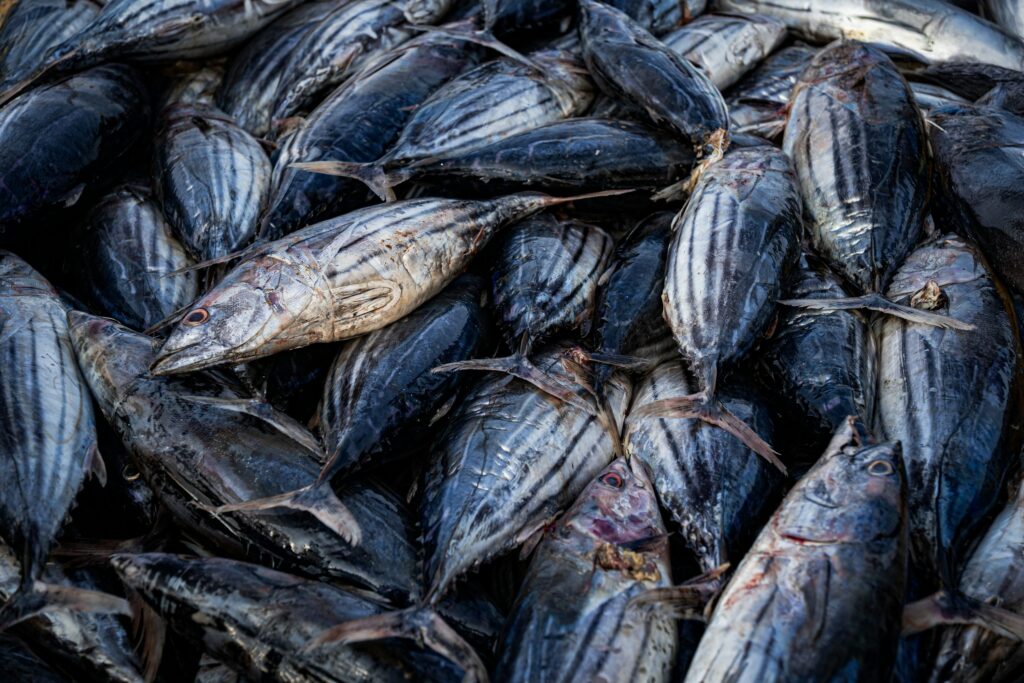
Demand for skipjack is high. In 2024, the North American tuna market was worth about 9.34 billion US dollars. Canned tuna made up around 65 percent of that, and skipjack accounted for about 40 percent of all tuna eaten in the region. Source: Market Data Forecast. Much of this tuna goes to places that consistently need supplies, such as school meal programs, military rations, foodservice, and household pantries.
In the United States, the canned tuna market was valued at about 3.10 billion US dollars in 2024. Canned tuna is the third most popular seafood after shrimp and salmon, with over 90 percent of households buying it each year. For canneries in the US and Mexico, this means steady, high demand that only a reliable supply can meet. While products may change to include pouches, flavored options, or premium packs, the main ingredient remains the same: skipjack. This steady demand is why having a solid sourcing strategy is more important than buying on the spot, especially when supply gets tight.
What makes Indonesia the right place to source skipjack?
Geography does much of the work. Indonesia sits inside the Coral Triangle, the most productive tuna habitat on the planet, straddling both the Pacific and Indian Oceans. That position helps explain why the country lands around 1 million tons of tuna a year, close to 15 to 16 percent of the global supply, making it the world’s largest tuna producer, as documented by the Indonesian pole-and-line industry body AP2HI. Because the archipelago draws from two oceans at once, supply stays steadier across the calendar than it does for nations tied to a single fishing zone.
Skipjack is the backbone of that catch. Indonesia produced roughly 433,000 metric tons of skipjack in 2021 alone. Behind that volume stands an immense fishing base. Indonesia counts hundreds of thousands of tuna vessels and roughly 1.7 million fishers, around 90 percent of whom are small-scale operators, as detailed by the MDPI Foundation. A large share of that skipjack is caught one fish at a time using pole-and-line and handline methods, a tradition that reduces bycatch and supports the responsibly sourced story North American retailers increasingly demand.
Volume and sustainability together are what make the country compelling. For a cannery, working with an experienced seafood supplier in Indonesia means tapping into a supply base that is both enormous and oriented toward the eco-labels your buyers ask about. That combination is difficult for smaller producing nations to match at scale.
How do US import rules shape your sourcing decision?
Buying tuna for the North American market is not only about price per ton. Any covered seafood entering the United States must comply with the Seafood Import Monitoring Program (SIMP), a traceability program that requires the importer of record to document each shipment from harvest through entry into US commerce. Tuna sits squarely within its scope. The program covers more than 1,100 species across 13 groups and accounts for nearly half of all US seafood imports.
For canneries and the importers who supply them, this raises the bar on supplier selection. The exporter must be able to provide harvest data, vessel and gear details, and clean chain-of-custody records for every lot, with no minimum shipment exempt from the rules. The direction of travel is toward more scrutiny, not less, as NOAA continues to strengthen traceability, so a supplier who is organized for compliance today is the safer bet for the seasons ahead. Indonesia’s processing sector has matured around exactly these expectations, operating to international food-safety standards such as HACCP and BRC. Sourcing from a seafood export company that treats documentation as part of the product, rather than an afterthought, protects your customs entries from costly holds and keeps the canning line running on schedule.
What should a cannery look for in a frozen seafood exporter?
Not every exporter can serve an industrial cannery. When you evaluate a frozen seafood exporter, weigh six things in particular.
First, cold-chain integrity, because skipjack destined for canning must be blast-frozen quickly and held at stable deep-freeze temperatures to control histamine formation and protect texture. Second, volume consistency, since a cannery cannot run on a partner who delivers in fits and starts. Third, product specifications that match your process, whether you need whole round skipjack, pre-cooked loins, or specific size grades. Fourth, certifications, including HACCP, BRC, and dolphin-safe or MSC credentials, where your buyers require them. Fifth, documentation discipline for SIMP and customs, so every container arrives with its paperwork complete. Sixth, responsiveness, because a single missing data point can hold a shipment of perishable frozen seafood products at port for days.
An exporter who scores well on all six turns raw supply into a dependable input rather than a recurring risk. The cheapest quote means little if the cold chain breaks or the catch certificate is incomplete, so weigh reliability and traceability alongside price.
What determines skipjack quality for canning?
Two cans of light tuna can come from the same ocean and still differ sharply in yield and flavor, and the reasons trace back to handling long before the fish reaches the retort. The first factor is freshness at landing. Skipjack begins to form histamine soon after death if it is not chilled quickly, and elevated histamine is both a food-safety risk and a common cause of lot rejections at US ports. A supplier whose vessels and plants move fish into the cold chain quickly protects you from that risk at the source.
Size grading is the second factor. Canneries run more efficiently when incoming skipjack falls within consistent weight bands, because uniform fish cook evenly and yield predictably. An exporter who grades and sorts before shipment saves your line the cost of doing it after the fact. The third factor is fat content and condition, which shift with the season and fishing grounds, influencing both texture and the oil-versus-water decision in the can. The fourth is the freezing method, where blast or brine freezing, followed by stable deep-freeze storage, preserves the muscle structure that holds together during cooking.
None of this is visible on a price sheet, which is why specifying your quality requirements up front and then auditing against them matters as much as negotiating the rate. A cannery that defines acceptable histamine limits, size bands, and freezing standards in its purchase terms gives a capable exporter a clear target to hit, shipment after shipment.
How does Indonesian skipjack reach North American canneries?
Logistics is the bridge between a productive ocean and a running line. Indonesian skipjack is typically blast-frozen at or near the port of landing, then shipped in reefer containers across the Pacific to canneries on the US West Coast and along Mexico’s Pacific corridor. Sailing times and cold-chain handoffs matter, so the strongest sourcing relationships plan shipments against the cannery’s production calendar rather than reacting on an order-by-order basis.
This is also where a supplier’s location pays off. Processing capacity positioned close to major tuna grounds shortens the journey from catch to freezer, which protects quality and trims the lead time that canneries build into their inventory planning. For buyers serving both the United States and Mexico, a single well-placed Indonesian source can feed multiple destinations through the same Pacific shipping lanes, simplifying a supply chain that would otherwise be stitched together from several smaller origins.
How do you build a resilient skipjack supply chain for 2026?
Resilience comes from designing the relationship, not just placing orders. Start by forecasting your annual skipjack need and sharing it with your exporter so production and freezing capacity can be reserved against your volume. Build in seasonality, since catch rates shift across the year, and a seasoned frozen seafood exporter will help you plan inventory buffers around the leaner months rather than leaving you exposed to them.
Diversification matters too. Even with a strong primary source, canneries serving both the United States and Mexico benefit from a supplier deep enough to scale with regional demand, rather than one that taps out at modest volumes. Lock in clear specifications, agreed-upon lead times, and documentation standards in writing, so quality and compliance do not drift from shipment to shipment.
Finally, treat sustainability as a commercial asset, not a checkbox. Indonesian fisheries continue to expand MSC certification and traceability, which feed directly into the eco-labels North American shoppers reach for. A fishery product backed by a credible sustainability and traceability story is easier to sell at retail, easier to clear through customs, and easier to defend if a buyer or regulator asks questions. In a market where compliance and conscience increasingly go hand in hand, that story is part of the value you are buying.
Why partner with CV Anugerah Bahari Mandiri?
For canneries weighing where to anchor their skipjack supply, CV Anugerah Bahari Mandiri offers a focused answer. Based in Makassar, South Sulawesi, the company processes and exports fresh and frozen fishery products caught fresh from Indonesian waters, positioned in the heart of the country’s richest tuna grounds. As a frozen seafood exporter built around a traceable, export-grade supply chain, it is structured to meet the documentation and consistency requirements of buyers in the United States and Mexico.
To see the range of species and formats available, explore the product catalog, and for deeper sourcing insights, visit the company blog. When you are ready to lock in volume for the season, reach out for a sourcing quote.
Skipjack will keep filling North American cans for the foreseeable future, and the canneries that win are the ones that secure it with intention. Pair predictable demand with a traceable, high-volume Indonesian source, and the hardest part of your operation, keeping the line fed, becomes the most reliable part of your year.
FAQ
Why is Indonesia a top supplier of frozen skipjack tuna?
Indonesia offers abundant skipjack resources, year-round availability, sustainable fishing practices, and export-ready processing that meets international food safety standards.
What should buyers look for in a frozen seafood exporter?
Choose an exporter with consistent supply, strong cold chain management, international certifications, complete documentation, and proven export experience.
What is the Seafood Import Monitoring Program (SIMP)?
SIMP is a U.S. traceability program requiring importers to provide harvest and supply chain documentation for regulated seafood products, including skipjack tuna.
How can North American canneries secure a reliable supply of skipjack?
Forecast demand, partner with experienced Indonesian exporters, define product specifications, and prioritize suppliers with dependable logistics and traceability.
Why partner with CV Anugerah Bahari Mandiri?
CV Anugerah Bahari Mandiri supplies export-quality frozen seafood with reliable sourcing, complete documentation, and consistent shipments for U.S. and Mexican seafood buyers.