
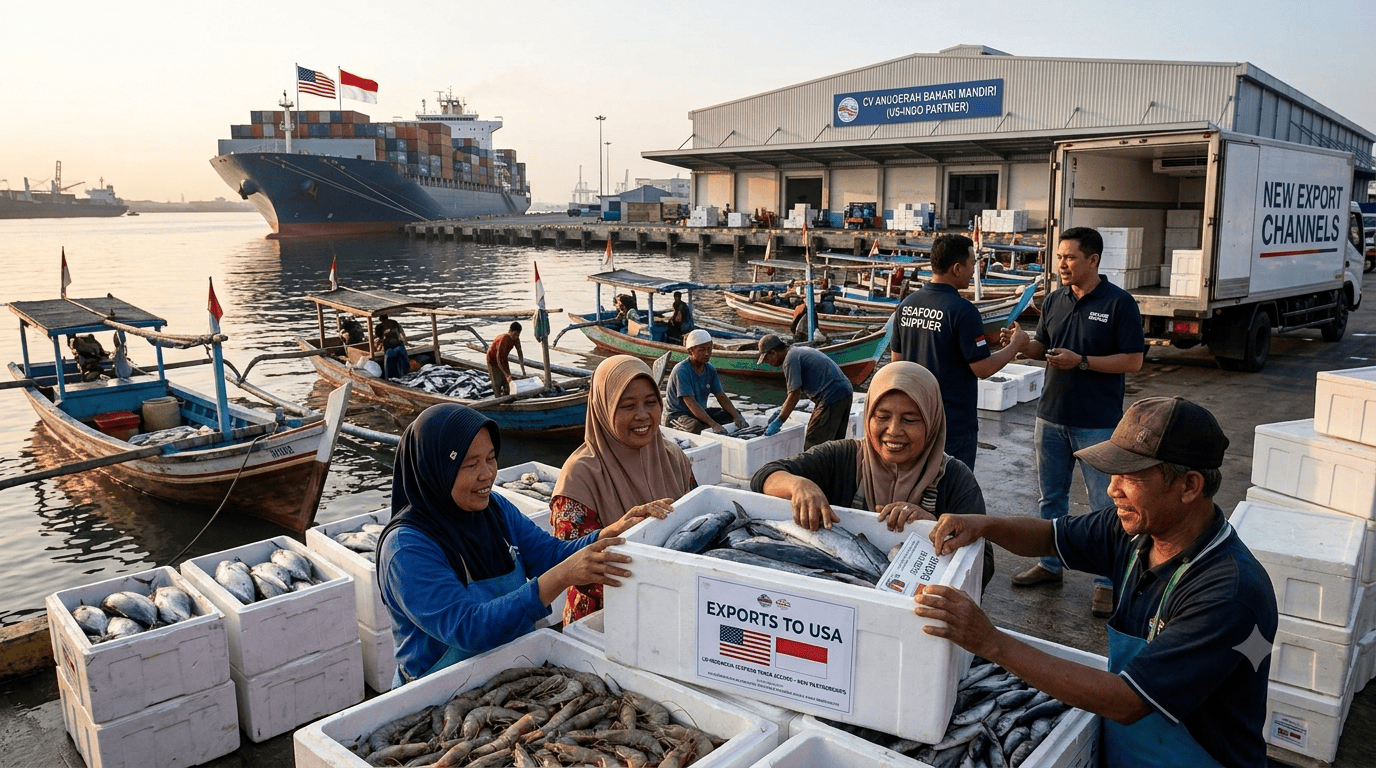
For two years, North American seafood buyers watched tariff lines ebb and flow like tides. In April 2025, the cost of bringing Indonesian products into the United States jumped overnight, then settled into a far more workable level. If you import tuna, shrimp, or other fishery products, the new US-Indonesia trade deal changes the math on every container, and it raises the stakes on choosing the right seafood supplier partner in Indonesia. This guide breaks down what was signed, what it costs, what it means for compliance, and how buyers in the United States and Mexico should respond in 2026.
What exactly did the United States and Indonesia agree to?
The short version is a sharp tariff cut wrapped inside a much larger reciprocal trade framework. On April 2, 2025, the United States imposed steep reciprocal tariffs on dozens of trading partners, and Indonesia was initially hit with a 32% tariff. After months of negotiation, the two governments announced on July 15, 2025, that the rate would drop to 19%, a figure confirmed in the White House fact sheet released that month. The framework was then formalized when Presidents Prabowo Subianto and Donald Trump signed the Agreement on Reciprocal Trade in Washington on February 19, 2026.
Timing details matter for your planning. First, the agreement takes effect 90 days after both countries confirm that their legal procedures are complete, so the rollout is staged rather than instant. Second, the deal is reciprocal. In return for the lower US rate, Indonesia agreed to eliminate tariff barriers on roughly 99% of US products entering its market, seafood included. The headline for an importer, though, is simpler: the cost of landing Indonesian seafood in the United States fell by a meaningful margin, and it did so with a signed agreement behind it rather than a temporary pause.
How does the deal change the cost of importing Indonesian seafood?
This is where the 19% number becomes real money. Under the reciprocal tariff structure, most Indonesian goods entering the United States, including seafood, now carry the 19% rate rather than the 32% rate that briefly applied in 2025. A handful of commodities, such as palm oil, coffee, cocoa, rubber, and textiles, were granted a 0% rate, but seafood was not on that duty-free list, so the practical benchmark for buyers is the move from 32% down to 19%.
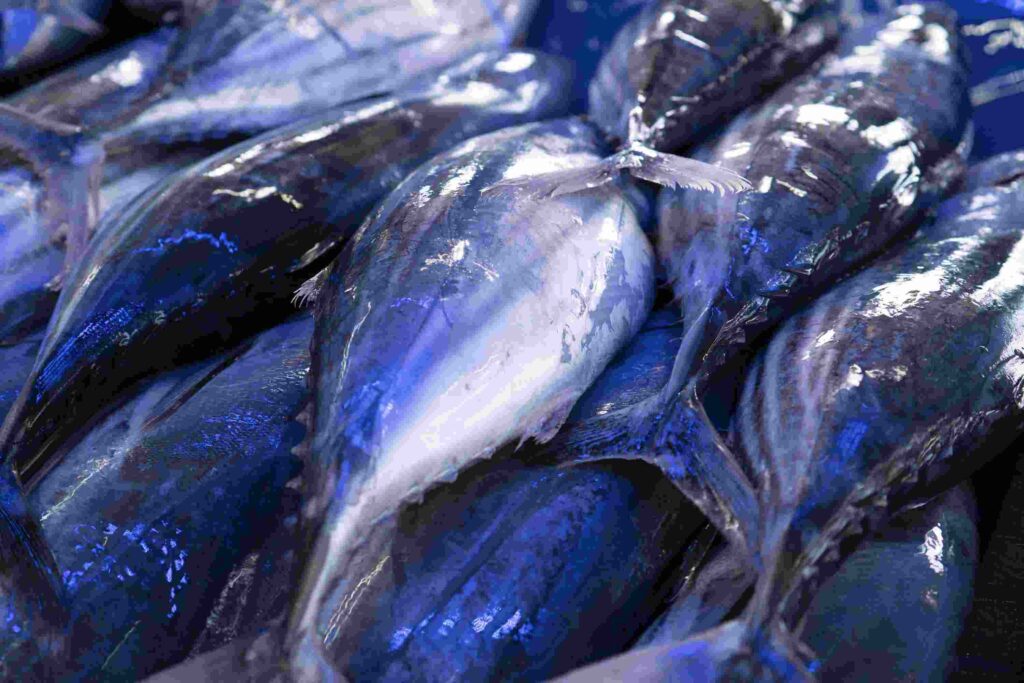
Run the numbers on a single container, and the effect is obvious. On a shipment of frozen tuna or shrimp valued at 100,000 US dollars, the difference between a 32% and a 19% reciprocal tariff is 13,000 dollars per container kept in your margin rather than paid at the border. Spread that across a year of regular ordering, and the deal reshapes your cost of goods. Just as important is predictability. A signed agreement gives buyers a stable rate to model against, which is exactly what procurement teams need when they negotiate annual contracts with a frozen seafood exporter. The lesson is to lock supply terms while the advantage is fresh, and to choose a seafood supplier partner in Indonesia who can hold price and volume commitments through the transition.
Does the deal make Indonesian seafood more compliant and traceable?
Yes, and this may prove as valuable as the tariff cut. The reciprocal trade agreement is not only about price. Indonesia is committed to accepting and fully implementing the World Trade Organisation Agreement on Fisheries Subsidies to combat illegal, unreported, and unregulated fishing, and to adopting and enforcing a ban on the importation of goods produced with forced labour.
For a North American buyer, those commitments line up neatly with the compliance regime you already face. The US Seafood Import Monitoring Program, as detailed by NOAA Fisheries, requires importers to trace covered species, such as tuna and shrimp, from harvest to entry. A national commitment to fight illegal fishing and forced labour strengthens the documentation environment in which your suppliers operate, which means cleaner catch records and fewer surprises when a shipment is screened. In other words, the deal nudges the entire Indonesian export sector toward the traceability standard that serious buyers demand, and it rewards exporters who already treat documentation as part of the product rather than an afterthought.
What does the deal mean for buyers in the United States and Mexico?
For US buyers, the benefit is direct. Lower tariffs reduce landed cost; the signed framework reduces uncertainty, and the compliance commitments reduce risk. Together, they make Indonesia a more attractive origin at a moment when buyers are actively diversifying away from single-source supply chains. The trade relationship is also significant in scale, with the United States running a 23.7 billion-dollar goods trade deficit with Indonesia in 2025.
For buyers in Mexico, the picture is different but still positive. The 19% rate is a United States measure, so it does not change Mexican import duties on Indonesian seafood. What does change is the strength of the supply base. As Indonesian exporters professionalise their traceability and lock in steadier US demand, they become more reliable partners across North America, including Mexico. A seafood supplier’s Indonesian team that can meet the toughest US documentation requirements is, by extension, a dependable source for Mexican distributors and processors seeking the same assurance of origin. Across the region, the direction is the same: documented, competitively priced seafood from a partner you can plan around.
Which Indonesian seafood products stand to benefit most?
Indonesia’s export strength sits squarely in the species that move in the largest volumes to North America, above all tuna and shrimp, alongside snapper, crab, and a wide range of frozen lines. These are the products for which a 13-point tariff swing has the greatest dollar impact, simply because they ship in such large quantities. They are also the species most closely watched under US traceability rules, which makes the deal’s compliance commitments especially relevant to them.
This is the sweet spot for a focused exporter. A specialist in fresh and frozen fishery products can pair the new tariff advantage with the catch documentation that covered species require, turning a macro policy shift into a practical sourcing win. Buyers should look closely at their highest-volume seafood export products and ask whether their current origin mix still makes sense now that Indonesian landed costs have improved. For many North American programs built around tuna loins, skipjack, and shrimp, the answer in 2026 is a clear reassessment in Indonesia’s favour.
How should North American buyers respond right now?
Treat the next two quarters as a window. The advantage is real, but the rollout is staged, and the agreement can be reviewed by either party, so the buyers who move deliberately will capture the most value. Start by mapping which of your imported species are affected, then model your landed cost at 19% against your current sourcing to quantify the savings. From there, open conversations with Indonesian exporters who can demonstrate both competitive pricing and clean traceability, because the deal rewards suppliers who deliver on compliance, not only on cost.
Documentation readiness should be your filter. Ask any prospective seafood supplier or Indonesian partner to show chain-of-custody records, harvest and vessel data, valid food-safety credentials such as HACCP, and a track record of shipments that cleared US entry without trouble. A capable Makassar-based seafood export company will have these ready and will walk you through them rather than improvise after you ask. Pair that diligence with the new tariff math, and you have a sourcing decision that improves margin and lowers risk at the same time.
Why partner with a compliance-ready Indonesian exporter?
A trade deal lowers the barrier, but it does not do the work of sourcing for you. The exporters who turn the 19% rate into a lasting advantage are those who combine reliable supply with documentation that withstands scrutiny at a US port. That is the model behind CV Anugerah Bahari Mandiri, which processes and exports fresh and frozen fishery products caught in Indonesian waters and works with buyers whose paperwork must pass SIMP review.
For an importer building a program around the new agreement, a partner like this removes the two biggest sources of friction at once: price and compliance. You gain the tariff benefit of Indonesian origin and the confidence that comes with a traceable supply from a single relationship. To start a compliant supply line of Indonesian tuna, shrimp, and other fishery products under the new trade terms, request a quote from CV Anugerah Bahari Mandiri.
Frequently Asked Questions
Most Indonesian seafood now falls under the 19% reciprocal tariff, down from the 32% briefly applied in 2025. Palm oil, coffee, cocoa, rubber, and textiles received 0%.
The framework was announced in July 2025, and Presidents Prabowo and Trump signed the Agreement on Reciprocal Trade in Washington on February 19, 2026.
No. The 19% rate is a US measure. Mexico’s import duties are unchanged, but a stronger, more compliant Indonesian supply base still benefits Mexican buyers.
Indonesia is committed to fighting illegal fishing, implementing the WTO Fisheries Subsidies Agreement, and banning forced-labour imports, reinforcing the traceability that US importers already require under SIMP.
High-volume lines such as tuna and shrimp see the largest dollar savings, since a 13-point tariff cut has the greatest impact on species that ship in large quantities.