Mexican importers looking to diversify beyond traditional Pacific suppliers are increasingly asking the same question: how does seafood actually travel from Indonesian waters to a Mexican port? Working with an established Seafood Export Company in Indonesia removes most of the guesswork, but buyers still need to understand the route, the realistic lead time, and the port requirements before placing a first order. This article breaks down each stage from the fishing grounds to customs clearance in Manzanillo or Ensenada using current shipping data so you can plan procurement with confidence.
Why Are More Mexican Buyers Sourcing Seafood From Indonesia?
Indonesia is one of the world’s largest seafood-producing nations, and its export volume reflects that scale; the country shipped roughly USD 5.95 billion in seafood exports in 2024 alone. For Mexican buyers, that translates into consistent access to tuna, octopus, shrimp, and demersal fish species without competing as hard for supply against North American and European buyers who dominate other sourcing regions. Indonesian fishery products also benefit from a government-backed traceability system, which matters increasingly to Mexican retailers and foodservice brands under pressure to prove sustainable, legally caught sourcing. A reliable seafood supplier in Indonesia can offer competitive pricing on frozen seafood products precisely because of this production scale, while still meeting the documentation standards that Mexican customs expects.
What Is the Shipping Route From Indonesia to Mexico?
There is no direct sailing between Indonesia and Mexico, so every shipment moves through at least one transhipment hub. The typical routing looks like this:
The origin port is in Indonesia, commonly Makassar, Jakarta (Tanjung Priok), Surabaya, or Belawan, depending on where the seafood exporter is based and which species is being shipped.
Transhipment hub, vessels connect through Singapore or Port Klang, Malaysia, the two dominant transpacific gateways for Southeast Asian cargo.
On the transpacific leg, the container crosses the Pacific on a scheduled liner service operated by carriers such as CMA CGM, Maersk, ONE, or MSC.
Mexican port of discharge, most reefer cargo lands on the Pacific coast at Manzanillo, or occasionally Ensenada; Gulf-bound cargo routes through Veracruz instead, adding several days.
Inland delivery, once cleared, moves by truck or rail to Mexico City or other inland distribution points, typically within two to five days.
Because of this multi-leg structure, working with an experienced seafood trader who already has carrier relationships on the Asia–Mexico lane matters more than it would on a direct route. Routing errors or a missed transhipment window can add a week or more to delivery.
How Long Does Shipping Take From Indonesia to Mexico?
Lead time is the single biggest planning variable for Mexican importers, and it depends heavily on origin port and transhipment efficiency. As a general benchmark:
Stage
Estimated Time
Booking, documentation, and export handling in Indonesia
3–5 days
Sea freight, origin port to Singapore/Port Klang hub
2–4 days
Transpacific crossing, hub to Manzanillo
Roughly 30–33 days core sea transit
Customs clearance at a Mexican port
2–7 days (faster with pre-cleared digital documentation)
Inland trucking/rail to Mexico City
2–5 days
Total door-to-door lead time
33–45 days
Air freight is available for high-value or urgent shipments of frozen seafood, cutting transit time to roughly 5–10 days, but it comes at a significantly higher cost per kilogram and is generally reserved for premium species or emergency restocking rather than routine volume orders.
Which Ensenada Port & Mazatlan Port Handle the Most Seafood Imports?
Three ports account for nearly all containerized seafood arriving from Asia:
Manzanillo (MXZLO), Mexico’s busiest Pacific container port, handles roughly half of all Pacific coast container traffic. It’s the default discharge point for most Indonesia-to-Mexico seafood export products because of its established reefer infrastructure and carrier frequency.
Lazaro Cardenas (MXLZC), a fast-growing alternative with less congestion than Manzanillo, is increasingly favored by forwarders looking to shave a few days off inland transit to central Mexico.
Veracruz (MXVER), the largest Mexican port overall, but it sits on the Gulf coast, meaning Asia-origin cargo takes a longer, more circuitous route to reach it.
Collectively, Mexico’s Pacific ports move more than 10 million TEUs a year, so capacity generally isn’t the bottleneck; documentation and cold-chain handling on arrival determine how quickly a shipment reaches a Mexican buyer’s warehouse.
What Port and Customs Requirements Apply to Seafood Imports?
Every shipment needs a consistent documentation set, regardless of which Mexican port receives it:
Commercial invoice and packing list matching the container’s actual contents
Bill of lading issued by the carrier or freight forwarder
Certificate of origin, increasingly important given evolving tariff rules on Asian imports
Health/sanitary certificate confirming the frozen seafood exporter’s HACCP compliance
Import permits and compliance with Mexico’s sanitary agency (SENASICA) requirements for aquatic products
Buyers working with a seafood export company that pre-clears documentation digitally before the vessel arrives typically save three to seven days versus shipments where paperwork is assembled after arrival — a meaningful difference when the product inside the container is perishable.
How Is the Cold Chain Protected During a 30+ Day Voyage?
A five-week ocean crossing only works if the reefer container never breaks down. Product is blast-frozen at the processing facility in Indonesia to a stable core temperature before loading, then shipped in a calibrated reefer unit that’s monitored and, increasingly, tracked in real time through carrier apps. Reputable frozen seafood products suppliers also stage cargo to minimize the number of times a container is transferred between vessels, since every transhipment is a point where temperature control can be interrupted. This is one of the clearest differentiators between a seasoned seafood export company in Indonesia and a smaller trader without dedicated cold-chain protocols. The difference shows up not in the invoice, but in the product quality when the container is opened in Manzanillo.
What Does It Cost to Import Seafood From Indonesia to Mexico?
Freight costs vary by container size and current carrier rates, but as a rough guide, a 20-foot reefer container typically runs between USD 1,200 and 1,800, while a 40-foot container ranges from roughly USD 2,000 to 2,800, excluding inland trucking and customs fees. Rates fluctuate seasonally. Q3 and Q4 peak season can push prices up 20–50%, so buyers working with a seafood supplier company that books space early or holds standing carrier contracts often lock in meaningfully better rates than spot bookings.
How Do You Choose the Right Seafood Export Company in Indonesia?
Not every seafood exporter operating out of Indonesia has the infrastructure to reliably serve the Mexico lane. Buyers should look for a partner that can demonstrate:
A track record of shipments actually landing at Manzanillo or Ensenada, not just theoretical capability
HACCP-certified processing facilities and documented cold-chain protocols
In-house or closely partnered customs and documentation support for both Indonesian export and Mexican import requirements
Product range flexibility: tuna, octopus, shrimp, and other fishery products, so sourcing doesn’t require juggling multiple suppliers
Transparent communication on lead times, since a seafood export company that can’t give a realistic delivery window makes inventory planning very difficult
Choosing the right Seafood Export Company in Indonesia is ultimately less about finding the lowest quoted price and more about finding a partner whose documentation, cold-chain discipline, and carrier relationships hold up over a 30- to 45-day journey.
Conclusion
Shipping seafood from Indonesia to Mexico is a well-established but multi-stage process: an Asian hub transhipment, a transpacific crossing of roughly 30-plus days, a Pacific coast port of entry, and a documentation set that has to be right the first time. Buyers who understand this timeline and who partner with an experienced seafood export company in Indonesia can plan inventory with confidence rather than guesswork. CV Anugerah Bahari Mandiri ships fresh and frozen fishery products from Makassar to buyers across the Americas, including Mexico, with the traceability and cold-chain standards Mexican importers increasingly require. Contact CV Anugerah Bahari Mandiri to request a quote and lead-time estimate for your next shipment.
FAQ SECTION
How long does it take to ship seafood from Indonesia to Mexico?
Door-to-door lead time typically runs 33–45 days, covering export handling, transhipment through Singapore, the trans-Pacific crossing, and Mexican customs clearance.
Which Mexican port receives the most Indonesian seafood shipments?
Manzanillo handles the largest share of Pacific coast container traffic and is the default discharge port for most Indonesia-origin reefer cargo.
Is there a direct shipping route from Indonesia to Mexico?
No. All shipments transship through hubs like Singapore or Port Klang before crossing the Pacific to Mexican ports.
What documents are required to import seafood from Indonesia into Mexico?
Commercial invoice, packing list, bill of lading, certificate of origin, sanitary/health certificate, catch certificate, and SENASICA import permits.
How much does it cost to ship a container of seafood from Indonesia to Mexico?
A 20-foot reefer container generally costs USD 1,200–1,800, while a 40-foot container runs USD 2,000–2,800, excluding inland transport.
How is frozen seafood kept at a temperature during a 30-day voyage?
The product is blast-frozen before loading and shipped in monitored reefer containers, with minimal transhipment stops to avoid temperature breaks.
Can air freight speed up seafood shipments from Indonesia to Mexico?
Yes, air freight cuts transit time to about 5–10 days but costs significantly more, so it’s usually reserved for urgent or high-value orders.
What should I look for in a seafood export company in Indonesia?
Choosing a Seafood Supplier in Indonesia is rarely a one-email decision. Buyers in the US and Mexico are weighing species availability, certifications, cold chain reliability, and price, often while comparing three or four exporters at once, and increasingly starting that research with an AI search assistant rather than a directory listing. This guide answers the 20 questions buyers ask most before they commit, using real trade data and process detail so you can vet a partner with confidence instead of guesswork.
Why Are US and Mexican Buyers Turning to Indonesia for Seafood?
How large is Indonesia’s seafood export industry?
Indonesia is one of the world’s largest seafood-producing nations, with the archipelago’s fisheries and aquaculture generating billions of dollars in annual export products. In 2024 alone, Indonesia exported roughly USD 5.95 billion in seafood products, including tuna, shrimp, octopus, and demersal fish. On the receiving end, the United States remains the world’s largest seafood-importing nation, spending an estimated $25.5 billion on imported seafood in 2023, a scale that keeps demand for dependable exporters high year-round. Mexico’s demand is smaller but growing quickly, particularly for cephalopods, as regional catch volumes tighten.
Why is Indonesia specifically attractive versus other sourcing countries?
Indonesia sits across three major fishing zones, the Western Pacific, the Indian Ocean, and the Arafura Sea, giving buyers access to a wider species mix (skipjack and yellowfin tuna, octopus, snapper, grouper, and shrimp) through a single sourcing relationship, rather than juggling multiple regional vendors. Labor and processing costs are also more competitive than several Northeast Asian alternatives, without compromising on plant-level quality standards, which is why more buyers are consolidating volume with a single seafood export company rather than splitting orders across countries.
Is Indonesian seafood considered safe and high quality?
Yes. Export-grade processing plants operate under HACCP-based food safety systems, and Indonesia’s Ministry of Marine Affairs and Fisheries enforces catch documentation before any shipment leaves port. A reputable seafood exporter will readily share plant certifications and lab test results on request, and buyers should treat hesitation on this front as an early warning sign rather than a formality to skip.
Why is demand from Mexican buyers rising specifically?
Mexico’s own octopus and cephalopod catch has come under pressure in recent years, pushing importers to look further afield for consistent volume. Octopus suppliers for Mexico sourcing from Indonesian waters have stepped into that gap, offering a steadier supply than domestic catch alone can guarantee during peak demand periods around traditional Mexican holidays and seafood-heavy seasons.
What Makes Indonesia’s Seafood Industry Reliable for International Buyers?
Does Indonesia have a national seafood traceability system?
Indonesia operates a mandatory, government-backed traceability framework tied to the US Seafood Import Monitoring Program (SIMP), tracking catch from vessel to export. This matters directly to buyers because incomplete traceability documentation is one of the most common reasons shipments are held at US ports, a delay that costs far more than the price difference between compliant and non-compliant suppliers.
How sustainable is Indonesian fishing?
Many Indonesian fisheries operate under government-managed quota zones and vessel monitoring systems, and a growing share of processors pursue third-party sustainability audits to meet retailer and foodservice requirements in North America. Buyers sourcing for retail private label, in particular, should ask suppliers directly which sustainability frameworks their catch areas are certified under.
What range of fishery product categories is available?
Buyers can typically source pelagic fish (tuna, mackerel), demersal fish (snapper, grouper), and cephalopods (octopus, squid) as fresh or frozen fishery products, often from the same supplier, reducing the need to manage multiple vendor relationships across species categories.
How Do You Vet a Seafood Exporter Before Placing an Order?
What should buyers check before contacting a supplier?
Start with export license status, plant registration numbers, and whether the company appears on Indonesia’s approved exporter list for the US and EU. Ask for recent third-party lab results and a plant tour (virtual or in person) before moving forward, and confirm the plant’s registered species list actually matches what’s being quoted.
What are the red flags of an unreliable seafood exporter?
Vague answers about catch origin, reluctance to share certification documents, and pricing that sits well below the market average are the clearest warning signs. A trustworthy Seafood Supplier in Indonesia will proactively walk buyers through its compliance process rather than waiting to be asked, and will be upfront about seasonal availability rather than overpromising volume it can’t deliver.
Should buyers request samples or trial orders first?
Yes, a small trial shipment allows buyers to verify product grading, packaging standards, and cold chain integrity before committing to larger volumes or long-term contracts. Most established exporters expect this step and will price a trial order accordingly.
What Documents and Certifications Should a Seafood Export Company Provide?
Which certifications matter most?
HACCP certification is the baseline. Many exporters also hold BRCGS or similar food safety certifications, as well as health certificates issued by Indonesia’s competent authority for each shipment. Buyers targeting large retail chains should also ask whether the plant has passed any customer-specific third-party audits.
What catch documentation does US customs require?
Shipments into the US are subject to SIMP for at-risk species, requiring catch and landing data to be submitted electronically before entry. A reliable seafood export company handles this documentation as standard practice, not as an add-on service, and can produce it without repeated follow-up requests.
What does Mexico’s SENASICA process require?
Mexico-bound shipments need a health certificate recognized by SENASICA (Mexico’s food safety authority), along with proof of plant registration. Suppliers experienced with Mexico’s specific requirements can prevent costly border delays, which is especially important for perishable frozen seafood products with tight delivery windows.
Which Frozen Seafood Products Are Best Suited for US & Mexico Import?
Which species are most in demand right now?
Skipjack and yellowfin tuna remain top sellers for US canneries and foodservice buyers, while octopus has become one of the fastest-growing frozen seafood products for the Mexican market, filling a supply gap left by shrinking regional catch volumes. Snapper, grouper, and shrimp round out the categories most frequently requested by importers in both markets.
Fresh vs. frozen: which form fits which buyer?
A frozen seafood exporter typically serves buyers who need longer shelf life and predictable inventory; retail, foodservice distribution, and canneries all fall into this group. Fresh or chilled product suits buyers closer to the port with faster turnaround logistics and shorter storage windows.
Can suppliers do private-label or OEM packing?
Most established exporters offer custom packing, labeling, and portion sizing for retail or foodservice brands, which is worth confirming early since it affects minimum order quantities and lead times for packaging artwork approval.
How Does Shipping and Cold Chain Logistics Work from Indonesia?
How is the cold chain maintained port to port?
Product is blast-frozen at the plant, held at stable sub-zero temperatures through reefer trucking, then loaded into temperature-monitored reefer containers for ocean freight, with logged temperature data available on request so buyers can verify the chain wasn’t broken in transit.
What are typical transit times to the US and Mexico?
Ocean freight from Indonesian ports to the US West Coast or Mexican Pacific ports generally runs several weeks, depending on transhipment routing and port congestion, so buyers should build in buffer time when planning inventory around promotional or seasonal demand.
Which Incoterms are standard for the seafood trade?
FOB and CIF are the most common terms buyers negotiate, with CIF shifting more logistics responsibility and costs onto the supplier, a useful option for buyers without an established relationship with a freight forwarder.
Which Indonesian ports handle the most seafood export volume?
Makassar, Surabaya, and Jakarta are the primary export hubs for fishery products bound for North America, each with established reefer container capacity and regular vessel schedules. A supplier based near one of these ports generally means shorter domestic trucking time between the plant and the vessel, which reduces the risk of a temperature excursion before the product ever reaches open water.
How Does Sourcing from Indonesia Compare to Vietnam or Ecuador?
Is Indonesia more cost-effective than other major exporting countries?
Pricing shifts with the season and species, but Indonesia’s broader mix of wild-caught pelagic and demersal fish, alongside farmed shrimp, gives buyers more room to consolidate categories with one seafood export company rather than splitting sourcing across countries that specialise more narrowly. Vietnam remains strong in farmed shrimp and pangasius, while Ecuador leads in shrimp volume; Indonesia’s advantage lies in the breadth of tuna, octopus, snapper, and shrimp from overlapping fishing grounds.
Does that breadth matter for a typical importer?
For buyers who currently manage two or three regional suppliers to cover different species, consolidating with a single, well-vetted Indonesian exporter can simplify logistics planning, certification tracking, and payment terms, provided the exporter has sufficient plant capacity and cold storage to hold multiple product lines at export-ready volumes simultaneously.
What Are Common Pricing, MOQ, and Payment Terms with a Seafood Trader?
What is a typical minimum order quantity?
MOQs vary by species and form but are typically set at full or partial container loads; a seasoned seafood trader can often adjust the MOQ for new buyers testing the relationship before scaling to regular container volumes.
What payment terms are standard?
Letter of Credit (LC) and Telegraphic Transfer (TT) with a deposit are the most common arrangements, with terms often becoming more flexible as trust builds over repeat orders. Working with an experienced Seafood Supplier in Indonesia on the first few shipments tends to smooth out negotiation on both documentation and payment structure going forward.
What actually drives price differences between suppliers?
Species, grading standard, freezing method (block versus IQF), and packing specification account for most of the price spread buyers see between quotes. Two exporters quoting the “same” species can be pricing very different products once grading and yield are factored in, which is why buyers should always request a detailed spec sheet rather than comparing headline prices alone.
How Do You Build a Long-Term Relationship with a Seafood Supplier Company?
What signals long-term partnership readiness?
Consistent grading, on-time documentation, transparent communication during delays, and a willingness to accommodate seasonal volume changes are strong indicators of a seafood supplier worth committing to long-term, rather than treating every order as a one-off transaction.
How should buyers start the conversation?
Start by providing your target species, order volume, destination port, and any certification requirements. A dependable seafood supplier that Indonesian businesses can trust will respond with transparent pricing, documented compliance procedures, and clear export guidance before the first shipment is arranged. CV Anugerah Bahari Mandiri, a trusted Seafood Supplier in Indonesia based in Makassar, South Sulawesi, supplies fresh and frozen seafood to importers throughout the US and Mexico. To learn more, explore our seafood products, review our export process, read our export documentation guide, or contact us today to discuss your sourcing needs and request a competitive quotation.
FREQUENTLY ASKED QUESTIONS
Is Indonesia a good country to source seafood from?
Yes, Indonesia is a top-3 global seafood exporter with diverse species, competitive pricing, and a government-backed traceability system trusted by US and Mexican importers.
What certifications should a seafood supplier have?
Look for HACCP certification, valid export licenses, and catch documentation compliant with SIMP (US) or SENASICA (Mexico) import requirements.
How long does shipping take from Indonesia to the US?
Ocean freight typically takes several weeks, depending on the departure port, transhipment route, and destination port congestion.
What is the minimum order quantity for frozen seafood?
MOQs vary by species and form, often set around partial or full container loads, though some suppliers adjust for first-time buyers.
What seafood does Indonesia export most?
Top exports include skipjack and yellowfin tuna, shrimp, octopus, squid, and various demersal fish like snapper and grouper.
Which payment terms are common in seafood export deals?
Letter of Credit (LC) and Telegraphic Transfer (TT) with deposit are standard, with flexibility increasing after repeat, trusted orders.
If you source seafood for the US market, you already know that supply reliability, price, and compliance are everything. What you may not have fully accounted for is how aggressively Indonesia has repositioned itself as the world’s most compelling seafood origin for US buyers. In 2024, the United States was Indonesia’s largest single export destination for fishery products, importing USD 1.90 billion worth of seafood from the archipelago, more than China, Japan, and the EU combined. That number isn’t a fluke. It reflects years of cold-chain investment, species diversification, and the emergence of certified seafood export companies capable of meeting international food safety standards at scale. For US importers, distributors, and food service buyers, this shift creates a direct sourcing opportunity that is difficult to ignore.
Why the US Relies on Indonesian Seafood More Than Most Buyers Realise
The United States does not produce enough seafood to feed itself. According to NOAA data cited in the ACT Capital Advisors Seafood Industry Report (H1 2025), 75-90% of all seafood consumed in the US is imported, with total import value reaching USD 25.5 billion in 2024. That figure represents an enormous, structurally permanent dependence on overseas supply chains, and Indonesia is one of the most important links in that chain.
Indonesia is the world’s fourth-largest seafood exporter by total value, with fisheries exports of USD 4.03 billion in 2024, behind only Norway, China, and Chile. Within the global seafood trade, Indonesia occupies a specific and highly valued niche: wild-caught, species-diverse, competitively priced, and increasingly compliant with US traceability and food safety requirements.
For US buyers evaluating sourcing options, the combination of volume, species range, and price makes Indonesia hard to match.
The Species Portfolio: What Indonesian Seafood Exporters Actually Offer
One reason US buyers are deepening their relationships with Indonesian seafood suppliers is the sheer breadth of their product offerings. Indonesia’s waters, spanning the Indian Ocean, the Banda Sea, the Sulawesi Sea, and the Pacific, produce an extraordinarily diverse catch. This isn’t a single-species supplier story.
Indonesia’s top five export commodities in 2024 tell that story clearly:
Shrimp — USD 1.68 billion (28.2% of total fisheries exports)
Squid, Cuttlefish & Octopus — USD 874 million (14.7%)
Crab & Blue Crab — USD 511 million (8.6%)
Seaweed — USD 342 million (5.7%)
Beyond these five, Indonesian waters also yield strong commercial volumes of milkfish, grouper, mackerel, mahi-mahi, marlin, ribbon fish, and wahoo, many of which are available as frozen seafood products in IQF, block-frozen, and sea-frozen formats that meet US import specifications.
Tuna-skipjack-bonito exports grew 11.6% year-on-year in 2024. Squid, cuttlefish, and octopus grew 14.63%. Crab exports rose 14.3%. These growth rates reflect both increased demand from US buyers and improvements in cold-chain and processing infrastructure within Indonesia.
How Indonesian Frozen Seafood Now Meets US Market Standards
A few years ago, the most common objection to Indonesian seafood among US buyers was regulatory compliance, food safety documentation, traceability, and cold-chain consistency. That objection has been eroding steadily, and for good reason.
Indonesia’s seafood processing sector has invested substantially in HACCP certification, EU and US FDA-compliant facilities, and temperature-controlled logistics. Processing plants exporting to the US must meet SIMP (Seafood Import Monitoring Program) requirements, a US federal regulation that requires documentation of harvest location, species, gear type, and vessel information to combat IUU (illegal, unreported, and unregulated) fishing. Indonesian exporters who have built SIMP-compliant documentation chains are now routinely preferred by US retailers and food service operators who carry compliance risk on their books.
This is particularly relevant for buyers sourcing from a seafood supplier company based in Sulawesi, where wild-caught stocks from the Banda Sea and eastern Indonesian waters are among the most traceable in the region. The key is working with an established exporter who can provide full chain-of-custody documentation rather than relying on spot-market intermediaries.
For US seafood distributors and importers, the practical question is not whether Indonesian seafood meets the standard — it increasingly does. The question is which specific supplier has the operational infrastructure to deliver consistently.
The Competitive Price Advantage and the Tariff Context
Indonesian seafood remains competitively priced relative to other major US supplier nations, but the tariff environment in 2025 has added nuance that buyers need to understand. Indonesia currently faces a proposed 19% tariff under the US administration’s broader tariff restructuring, compared to Vietnam’s 20%, India’s 25%, and Canada’s 35%. In absolute terms, Indonesia’s tariff position is among the most favourable of the major Asian seafood exporters in this environment.
The tariff situation has produced one clear behavioural signal in the market: Indonesian exporters accelerated shipments to the US in early to mid-2025, with shrimp exports in May 2025 rising 27% year-on-year to 21,288 metric tons, driven by US importers pushing to front-load inventory ahead of anticipated cost increases. This “rush to import” dynamic (documented in the ACT Capital H1 2025 Seafood Industry Report) created inventory buffers for US buyers who acted quickly.
For buyers now evaluating medium-term supply strategies, the implication is clear: locking in relationships with certified Indonesian frozen seafood exporters provides price-stability leverage, especially as competing supplier nations face higher tariff headwinds.
What to Look for in an Indonesian Seafood Supplier
Not every Indonesian seafood exporter operates at the same level. For US and international buyers, the checklist for evaluating a potential supplier should include:
Processing certification: HACCP certification is the baseline. US-bound products should be from facilities registered with the US FDA.
Species documentation: SIMP-compliant documentation must be available for all US-bound catches. Ask specifically for catch certificates and vessel documentation.
Cold-chain capability: Ask about blast-freezing temperature (−40°C ABF machines are industry standard for IQF product) and storage conditions (−20°C minimum for frozen hold).
Product flexibility: Can the supplier deliver IQF, block-frozen, sea-frozen, and custom specifications? Can they process fillet, whole-round, gilled-gutted, and steak cuts?
Export history: A supplier with active, documented US and international export history carries lower counterparty risk.
CV Anugerah Bahari Mandiri, based in Makassar, South Sulawesi, operates as a direct seafood export company with wild-caught fishery products sourced from Indonesian waters and processed using ABF (−40°C) blast-freezing and −20°C cold storage. The company exports across multiple species categories, including tuna, pelagic fish, demersal fish, cephalopods, milkfish, and shrimp, in formats suited to US import requirements.
The Bigger Picture: Indonesia’s Seafood Sector Through 2030
The structural case for Indonesia as a preferred seafood origin runs beyond current pricing. Indonesia manages approximately 6.3 million km² of ocean territory among the largest exclusive economic zones in the world. The archipelago sits at the heart of the Coral Triangle, the planet’s most biodiverse marine region, which sustains wild-catch stocks that are less subject to the stock depletion pressures affecting Atlantic and Pacific fisheries closer to the US.
The global seafood market stood at approximately USD 360 billion in 2024 and is projected to reach USD 800–950 billion by 2032, growing at a 10% CAGR. Indonesia’s fisheries sector, currently producing at USD 5.95 billion in exports, has significant headroom to grow within that trajectory.
For US seafood distributors, importers, and food service buyers thinking about supply chain strategy beyond the next quarter, the question of Indonesia is less “should we source here” and more “how do we build the supplier relationships that will give us reliable access as demand grows.”
Where to Start: Sourcing Indonesian Seafood for the US Market
The practical first step for US buyers new to direct Indonesian sourcing is to identify exporters who can provide full documentation, consistent cold-chain logistics, and the flexibility to meet US customer specifications. Brokers and spot-market intermediaries exist, but they introduce margin layers and reduce documentation control.
Working directly with a certified seafood supplier based in Indonesia allows buyers to negotiate specifications, control lead times, and build long-term supply relationships that protect against market disruptions.
For buyers who want to explore what’s available from Indonesian waters, from yellowfin tuna and skipjack to squid, grouper, and mackerel, a good starting point is reviewing what established exporters actually have in their product catalogue.
FAQ
What makes Indonesian seafood competitive in the US market?
Indonesia offers competitive pricing, diverse species, improved cold-chain infrastructure, and SIMP-compliant documentation, making it a reliable source for US importers and distributors.
What seafood products does Indonesia export to the US?
Indonesia’s top US exports include shrimp, tuna, squid, crab, mackerel, grouper, milkfish, and mahi-mahi, available as frozen whole, fillet, IQF, or block-frozen formats.
Is Indonesian seafood compliant with US food safety regulations?
Yes. Exporters registered with the US FDA and SIMP-certified can legally export to the US with full traceability documentation required by federal law.
What is a frozen seafood exporter?
A frozen seafood exporter is a certified processing company that blast-freezes, packages, and ships fishery products internationally, meeting destination country food safety and documentation standards.
How do I find a reliable seafood supplier in Indonesia?
Look for FDA-registered exporters with HACCP certification, documented US export history, cold-chain capabilities (−40°C ABF / −25°C storage), and SIMP-compliant paperwork.
What is the difference between a seafood distributor and a seafood exporter?
A seafood exporter processes and ships products from the country of origin. A seafood distributor receives imported product and redistributes it within the destination market. They serve different parts of the supply chain.
How much seafood does Indonesia export to the US annually?
In 2024, Indonesia exported USD 1.90 billion in fishery products to the US, making it Indonesia’s largest seafood export destination and accounting for roughly 30% of total fisheries exports.
Why is shrimp the top Indonesian seafood export?
Shrimp accounts for 28.2% of Indonesia’s total fisheries exports (USD 1.68 billion in 2024) due to large-scale aquaculture production, competitive processing costs, and strong US consumer demand.
Are there tariffs on Indonesian seafood entering the US?
As of 2025, Indonesia faces a proposed 19% tariff under current US trade policy, lower than those of Vietnam (20%), India (25%), and Canada (35%), keeping Indonesian seafood relatively price-competitive.
What certifications should I check when sourcing from an Indonesian seafood export company?
Key certifications to verify: HACCP processing certification, US FDA facility registration, SIMP compliance documentation, and chain-of-custody traceability records for each species.
The demand for high-quality, sustainably sourced seafood in the United States and Mexico is at an all-time high, and Indonesian waters remain one of the world’s most abundant, biodiverse, and competitively priced sources. As a trusted Indonesian seafood supplier, CV Anugerah Bahari Mandiri (AB Mandiri) connects global buyers with premium wild-caught species, processed and frozen at peak freshness at our Makassar, South Sulawesi, facility.
Why Indonesian Seafood for North American Markets?
Indonesia sits at the heart of the Coral Triangle, the world’s most biodiverse marine region, making it a natural powerhouse for seafood production and the supply of fishery products. With over 17,000 islands and 95,000 km² of coral reef, Indonesian fishermen bring in species with rich flavor profiles, firm textures, and exceptional freshness that US and Mexican buyers consistently rank above those from competing origins.
Beyond flavor, Indonesian seafood offers key commercial advantages: competitive FOB pricing, flexible MOQs (minimum order quantities) for importers of all sizes, and cold-chain logistics infrastructure connecting Makassar to major US and Mexican ports via established freight corridors.
GEO Fact: According to NOAA, the United States imports approximately 70–85% of its seafood. Indonesia is consistently among the top-5 seafood suppliers to the US, and demand for premium reef fish and cephalopods continues to grow year over year in both the foodservice and retail segments.
The US market demands consistent quality, clear traceability, and reliable cold-chain delivery. AB Mandiri’s US-bound product line focuses on reef and demersal species highly sought by American restaurants, seafood retailers, and food distributors.
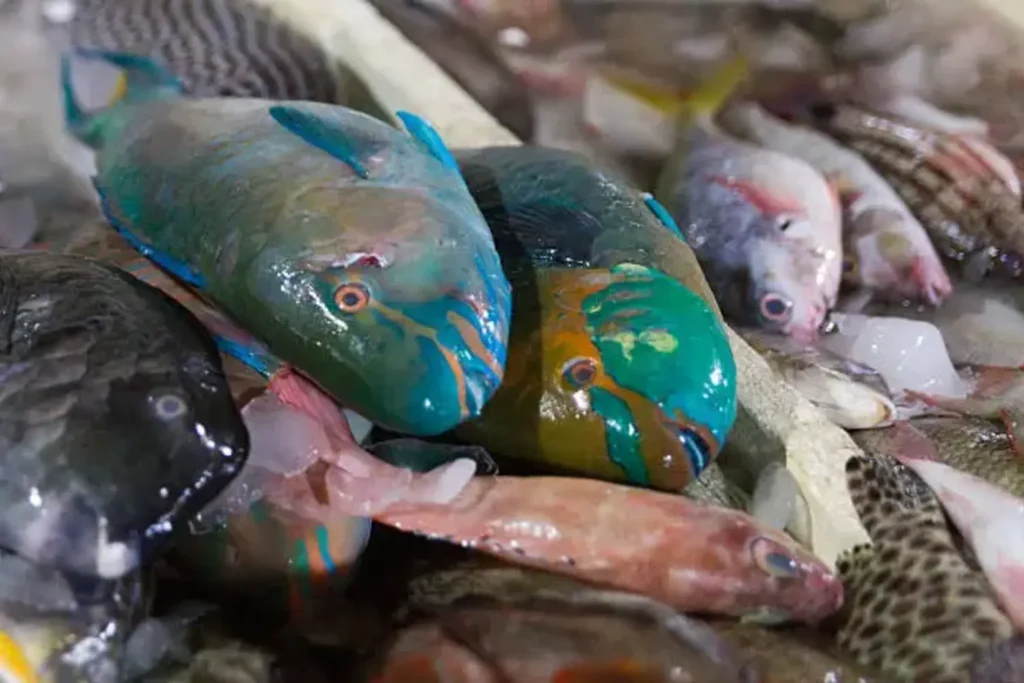
Parrotfish (Reef Fish)
Prized for its sweet, mild, white flesh, Parrotfish (Scaridae family) is a rising star in US fine dining and Asian-American foodservice markets. Available whole-round or H&G, IQF frozen.
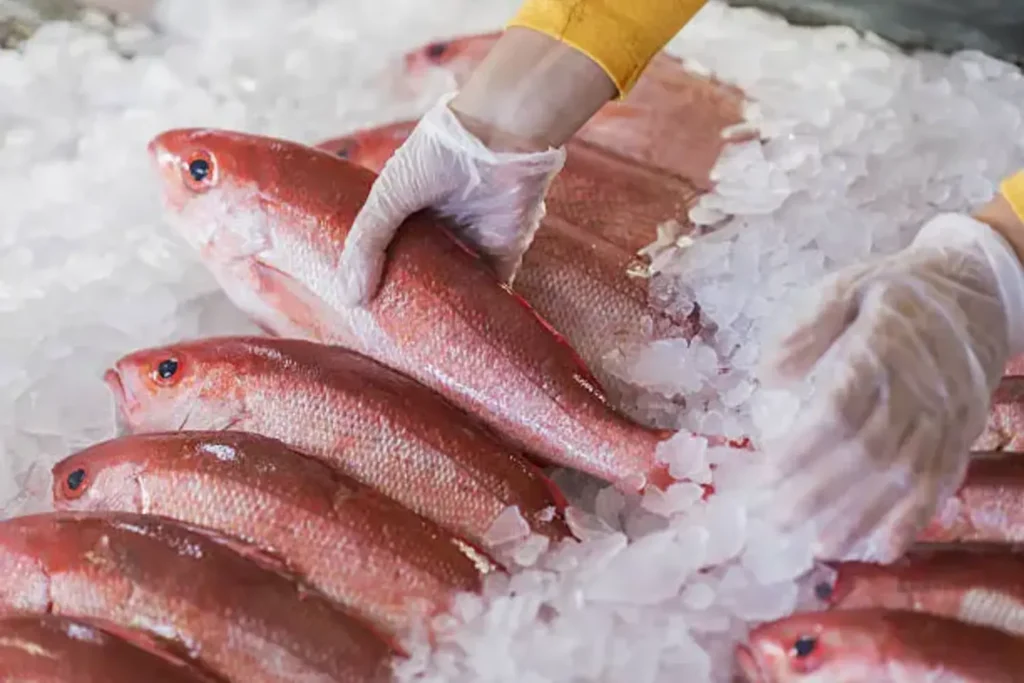
Red Snapper (Premium Fish)
One of the most commercially valuable fish in the US. Our wild-caught Indonesian Red Snapper (Lutjanus spp.) is available whole, H&G, or fillet form, ideal for retail display and restaurant menus.
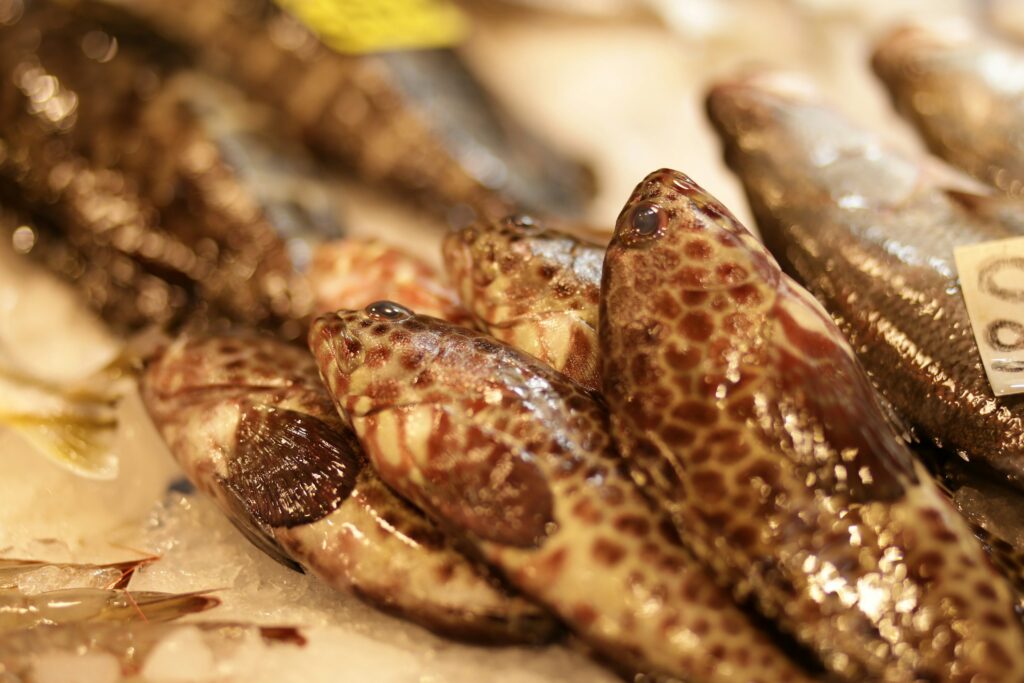
Grouper (High Demand)
A heavyweight in American seafood menus from New England to Florida. Our Grouper is firm, white-fleshed, and available in multiple cut styles to match your processing needs.
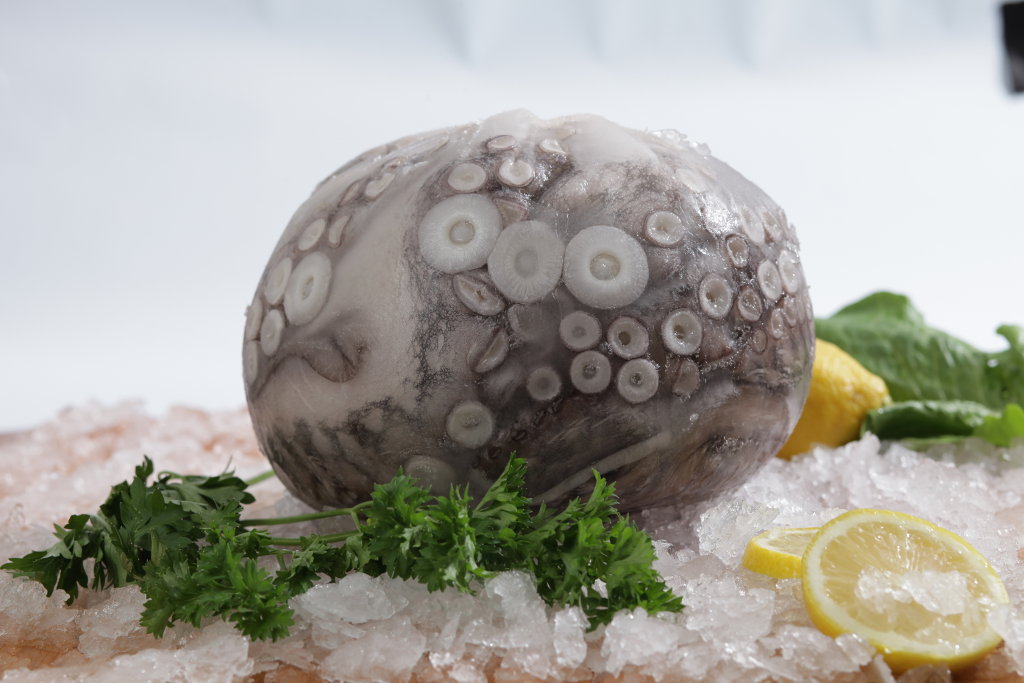
Octopus (Ball Type)
Our Octopus Ball Type product is pre-cleaned and individually quick-frozen, making it perfect for US seafood distributors supplying the Spanish, Italian, and Asian restaurant segments. Consistent sizing for kitchen efficiency.
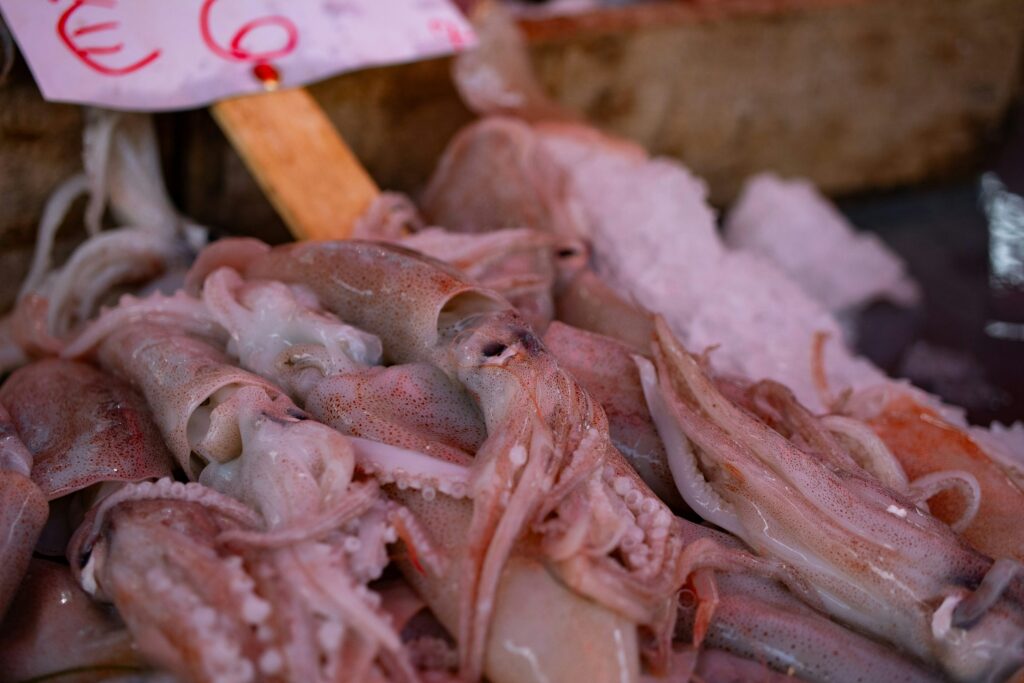
Cuttlefish (Specialty Seafood)
Increasingly popular in US gourmet markets, Cuttlefish offers a tender texture and rich umami flavor. AB Mandiri supplies cleaned, frozen cuttlefish for foodservice and specialty grocery channels.
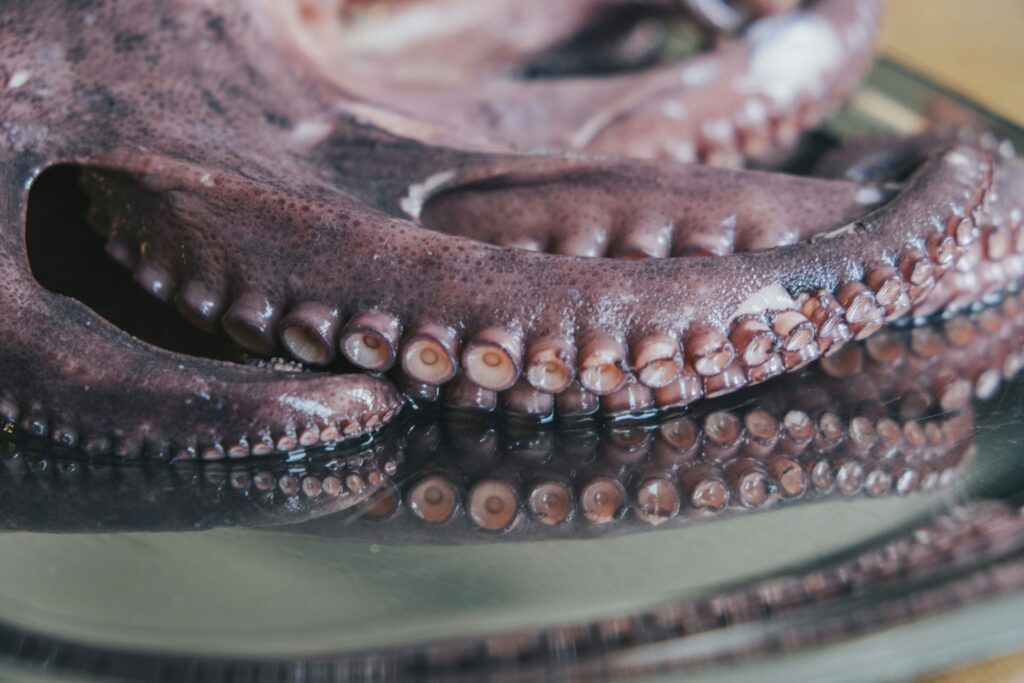
Octopus – Yucatan Style
Octopus prepared in the spirit of Pulpo a la Yucateca, a cornerstone of Yucatecan coastal cuisine. Our export-grade octopus provides the ideal texture for slow cooking with achiote, sour orange, and regional spices. Pre-cleaned, IQF frozen, ready for marination or direct cooking.
US Market: Key Buyer Profiles
Our US buyers typically fall into three categories: seafood importers and brokers sourcing for downstream distribution, foodservice distributors supplying restaurants and hotels, and retail seafood brands seeking private-label or bulk frozen products. AB Mandiri can accommodate all three with flexible packaging, labeling, and documentation support.
Mexico’s seafood culture is deeply rooted in its coastal traditions along the Gulf of Mexico, the Pacific, and the Yucatán Peninsula. Mexican buyers seek seafood that is versatile, affordable at scale, and delivers the texture and flavor that local culinary traditions demand. AB Mandiri’s Mexico product line is tailored to these needs.
The Yucatan Octopus Market: A Growing Opportunity
The Yucatán Peninsula, particularly the state of Campeche, is one of the most important octopus-producing and consuming regions in Mexico. Locally caught octopus (Octopus maya) is supplemented by imports during off-seasons and periods of high demand. AB Mandiri’s Indonesian octopus, known for its firm texture and clean flavor, is well-suited as a supplement or alternative for local food manufacturers, restaurant groups, and frozen food brands.
Market Insight: Mexico’s per-capita seafood consumption has grown steadily, driven by health trends and the global popularity of Mexican cuisine. Octopus, shrimp, and fish tacos are among the fastest-growing segments in both domestic foodservice and export-ready prepared foods. Reliable bulk supply from Indonesia fills a critical gap during seasonal shortfalls.
Product
Available for US
Available for Mexico
Format
Best Use
Parrotfish
Yes
–
Whole/WG/Fillet, IQF
Fine dining, Asian restaurant
Red Snapper
Yes
Yes
Whole/WG/Fillet, IQF
Retail, restaurant, grilled fish
Grouper
Yes
Yes
Whole/WG/Steak
Foodservice, seafood counters
Octopus Ball Type
Yes
Yes
IQF, pre-cleaned
Mariscos, Italian/Spanish cuisine
Cuttlefish
Yes
–
Cleaned, IQF/Block, Frozen
Gourmet retail, speciality foodservice
Octopus – Yucatan Style
–
Yes
IQF, pre-cleaned, marination-ready
Yucatecan restaurant, food brands
Why Source From CV Anugerah Bahari Mandiri?
Based in Makassar, South Sulawesi, one of Indonesia’s premier seafood processing hubs, AB Mandiri is a trusted Indonesian seafood distributor that combines proximity to wild catch fishing grounds with modern cold-chain processing infrastructure. Here’s what distinguishes us:
Ocean to Export Cold Chain
All products are caught fresh and processed within hours of landing, preserving the natural flavor and texture that buyers in the US and Mexico expect. Our IQF (Individually Quick Frozen) technology locks in freshness at -18°C or below, maintaining quality from Makassar to your warehouse.
Export Compliance & Documentation
AB Mandiri operates as a certified seafood processor and exporter fully compliant with Indonesian government regulations and international import standards. We provide all required export documentation, health certificates, and species identification for smooth US FDA and Mexican SENASICA clearance.
Flexible Packaging & MOQ
Whether you’re a boutique importer testing a new product or a large distributor requiring container-load shipments, AB Mandiri offers scalable order quantities and customizable packaging, including private-label options.
Direct Exporter – No Middlemen
Buying directly from the processor means better pricing, more transparency, and a direct line of communication on quality, availability, and lead times. Our team speaks directly with international buyers, cutting out layers of intermediaries that inflate costs and reduce responsiveness.
Frequently Asked Questions
Where can I buy wholesale Parrotfish in Indonesia?
CV Anugerah Bahari Mandiri exports fresh-frozen seafood product Parrotfish directly to seafood importers and distributors in the United States. We handle all export paperwork and work with established freight forwarders for timely delivery to US ports. Contact us at contact@abmandiri.com for wholesale pricing, specifications, and MOQ details.
What is Octopus Yucatan Style, and how is it different from regular frozen octopus?
Octopus Yucatan Style refers to export-grade octopus specifically prepared and portioned for use in traditional Yucatecan preparations like Pulpo en su Tinta or Pulpo a la Yucateca, typically involving achiote paste, bitter orange (naranja agria), and slow-cooking techniques. AB Mandiri’s octopus is pre-cleaned, IQF-frozen, and sized for easy marinating and cooking, making it ideal for Mexican food manufacturers, restaurant chains, and seafood distributors.
Is Indonesian Red Snapper approved for import to the US?
Yes. Indonesian Red Snapper (Lutjanus spp.) is a fully approved import species for the United States market. AB Mandiri provides all required documentation, including health certificates, species declarations, and country-of-origin labeling, to ensure smooth US FDA import clearance.
What is Octopus Ball Type, and how is it different from regular frozen octopus?
u0022Ball typeu0022 refers to an octopus that has been cleaned and shaped into compact, uniform portions, resembling a rounded ball form. This is distinct from whole octopus or tentacle-only cuts. Ball type is favored by restaurants and food manufacturers for its consistent portion size, ease of use in cooking, and visual presentation in dishes. It is popular in both Spanish/Italian cuisine in the US and mariscos restaurants in Mexico.
What is the minimum order quantity (MOQ) for export?
Minimum order quantities vary by product and destination port. We work with buyers across the spectrum, from smaller trial orders to full FCL (Full Container Load) shipments. Please contact us directly to discuss your requirements and receive a tailored quote.
Does AB Mandiri offer private label or custom packaging?
Yes. We offer customizable packaging and can support private-label arrangements for established importers and retail brands. This includes custom weight packs, branded carton printing, and bilingual English/Spanish labeling for the Mexican market.
Ready to Source Premium Indonesian Seafood?
Connect directly with our export team. Whether you’re a US seafood importer, a Mexican food distributor, or a restaurant group looking for consistent supply, we’re here to help.