Indonesia has quietly achieved something no other fishing nation has done before: it built a mandatory, government-backed, end-to-end traceability system covering every seafood product from the moment it leaves the water to the moment it crosses a border. For US importers, Spanish wholesalers, and global buyers searching for a reliable seafood exporter that can prove the provenance of every shipment, this transformation changes everything. This article explains exactly how it happened, why it matters for your supply chain, and what Indonesia’s traceability revolution means for buyers sourcing frozen seafood products today.
Indonesia’s Ocean: The Numbers Behind the Nation’s Rise
Before we discuss traceability, it is worth understanding why Indonesia’s fisheries are a global force in the first place. Indonesia is an archipelago of over 17,500 islands, spanning 3.25 million km² of ocean. Making it the largest maritime nation in Southeast Asia. According to SEAFDEC’s 2025 country profile, approximately 70% of Indonesia’s total land and sea area is ocean, making the fisheries sector foundational to the national economy.
The scale of production is enormous:
| Metric | Figure | Source |
| Indonesia’s share of global seafood production | 7% of the world total | FAO SOFIA Report, 2024 |
| Global seafood trade value (2022) | USD 195 billion | FAO SOFIA Report, 2024 |
| US imports of Indonesian seafood (H1 2024) | USD 889.39 million | GDST / AP2HI, 2025 |
| Indonesia’s share of its own total seafood exports going to the US | 38% | GDST / AP2HI, 2025 |
| Indonesia’s fisheries contribution to national GDP (Q3 2024) | 2.54% — IDR 407 trillion | SEAFDEC, 2025 |
| Aquaculture production growth (2000–2021) | From 993,727 t to 14.6 million t | FAO FishStatJ, 2023 |
As Indonesia’s primary export market, the United States requires seafood exporters to maintain exceptional traceability, safety, and compliance. Meeting SIMP requirements and sustainability standards has become essential for Indonesian suppliers serving American importers and distributors.
What Is Seafood Traceability And Why Does It Matter?
Seafood traceability refers to the ability to track a fish product at every step of its journey: from the vessel that caught it, through the processor, cold-chain logistics, export documentation, and all the way to the end buyer’s loading dock.
For US importers and Spanish distributors, traceability is no longer optional. The US SIMP program, the EU’s IUU Regulation, and evolving consumer expectations around sustainable sourcing have all made verified traceability a baseline requirement for doing business. In fact, according to the GDST (Global Dialogue on Seafood Traceability), US and European policy requirements are “driving the need for full product traceability” at a pace that is now reshaping global supply chains.
When you work with a certified seafood supplier company in Indonesia, you are not just buying fish; you are buying a documented chain of custody that protects your business from regulatory risk, reputational damage, and the growing threat of IUU (Illegal, Unreported, and Unregulated) fishing contaminating supply chains.
STELINA: Indonesia’s National Traceability Revolution
The centrepiece of Indonesia’s traceability achievement is STELINA, the Sistem Ketertelusuran dan Logistik Ikan Nasional (National Fish Traceability and Logistics System).
Mandated by the Ministry of Marine Affairs and Fisheries Regulation Number 32 of 2024, STELINA is now legally required for every actor in Indonesia’s fisheries supply chain, from small-scale fishers and aquaculture farmers to processors, traders, and exporters. No exceptions. No exemptions for company size. According to SEAFDEC’s 2025 Indonesia country profile, STELINA applies to:
- All marine and fresh fishery products, whether wild-caught or farmed
- Domestic market goods and export-destined shipments are equally
- Businesses of all sizes — micro, small, medium, and large-scale operations
- The full supply chain from pre-production, production, processing, distribution, and marketing
The system integrates catch data from fishing vessels with processing plant records, cold-chain logistics tracking, and export documentation in a single, interoperable digital platform. Crucially, Indonesia has also upgraded STELINA to align with the GDST Standard. Making it the first government in the world to integrate it into a national traceability system. This is not a pilot program. It is a mandatory national infrastructure.
| STELINA Key Feature | Details |
| Legal mandate | Regulation No. 32 of 2024, Ministry of Marine Affairs & Fisheries |
| Coverage | 100% of fishery supply chain actors, all product types |
| GDST alignment | First national system globally compliant with the GDST Standard |
| E-logbook impact | 475% rise in reported vessel arrivals since the implementation |
| International integration | Aligned with FAO, ILO, and IMO frameworks |
How Indonesia Combats IUU Fishing — A Critical Issue for US Importers
IUU (Illegal, Unreported, and Unregulated) fishing is one of the most pressing problems in global seafood supply chains. The FAO estimates that IUU fishing accounts for up to 26 million tonnes of fish annually, representing losses of USD 10–23 billion per year globally.
For US and Spanish importers, sourcing from a country with a robust IUU framework is a direct business risk management tool. Indonesia’s government has been proactive on this front:
- Indonesia is an active member of FAO, ILO, and IMO anti-IUU frameworks
- The Ministry of Marine Affairs and Fisheries oversees Port State Measures to prevent IUU-caught fish from entering legitimate supply chains
- All vessels operating in Indonesia must now be registered in STELINA and file digital catch reports (e-PIT: Penangkapan Ikan Terukur), a system that recorded a 475% increase in vessel arrival reports since its introduction
Partnering with a verified seafood export company in Indonesia ensures clean documentation, regulatory compliance, and transparent sourcing practices throughout. This helps businesses meet SIMP requirements while reducing legal exposure and protecting brand reputation from IUU seafood.
Indonesia’s Top Seafood Export Products: What US and Spanish Buyers Are Sourcing
Indonesia’s fisheries biodiversity is unmatched. The country’s waters span two major oceans and contain some of the world’s most productive fishing grounds, including the Coral Triangle. The range of seafood export products available from Indonesian suppliers spans virtually every category that US and European buyers need.
CV Anugerah Bahari Mandiri, based in Makassar, South Sulawesi, is a seafood supplier in Indonesia that processes and exports wild-caught fishery products across these categories, using blast-freezing technology at -40°C and cold storage at -25°C to maintain product integrity from the ocean to the container.
For US buyers requiring HACCP compliance, and Spanish buyers sourcing under EU food safety standards, working with established seafood distributor networks in South Sulawesi, one of Indonesia’s most productive fishing regions, offers significant logistical and quality advantages.
Why South Sulawesi Is Indonesia’s Seafood Export Heartland
Not all Indonesian seafood exports originate from the same place. South Sulawesi, home to the port city of Makassar, is one of the country’s most strategically important fisheries hubs and one of the most biodiverse marine regions on Earth.
Sulawesi’s waters contain remarkable aquatic biodiversity, including species found nowhere else on the planet. The island’s proximity to the Banda Sea, Flores Sea, and Makassar Strait gives South Sulawesi-based exporters access to premium wild-caught species year-round, while its deepwater fishing grounds yield high-quality pelagic and demersal stocks.
For international buyers, sourcing from a frozen seafood exporter in Makassar means:
- Direct access to Indonesian fishing grounds without multi-leg supply chain complications
- Shorter cold-chain transit from vessel to processing facility
- Products processed at -40°C ABF (Air Blast Freezer) for maximum freshness retention
- Documentation fully aligned with STELINA and GDST traceability requirements
MSC, ASC, and Certification: What Indonesian Exporters Now Carry
Traceability infrastructure alone is only part of the picture. Many leading Indonesian seafood exporters and fishery product processors now carry internationally recognized third-party certifications that independently verify sustainability and traceability claims.
Key certifications increasingly held by Indonesian seafood companies include:
- MSC (Marine Stewardship Council) the global standard for wild-capture sustainable fisheries. MSC-certified tuna from Indonesia is now actively sought by US retail chains and European food service buyers.
- ASC (Aquaculture Stewardship Council) certification is required for aquaculture products like shrimp destined for premium buyers in Europe and the US.
- HACCP is required for all processors exporting to the US and EU under food safety compliance frameworks.
These certifications, combined with STELINA’s national traceability backbone, create a multi-layer verification ecosystem that no other developing nation’s fisheries sector currently matches at scale.
What This Means for US and Spanish Importers Right Now
For American seafood importers operating under SIMP (the Seafood Import Monitoring Program), Indonesia’s STELINA system directly simplifies compliance. SIMP requires importers of 13 specific species, including tuna, swordfish, shrimp, red snapper, and sea cucumber, to provide detailed chain-of-custody documentation at the point of entry. Indonesian exporters operating within the STELINA framework can now provide this documentation directly from the national system, significantly reducing the documentation burden on US importers.
For Spanish and Latin American buyers operating under EU IUU Regulation No. 1005/2008, Indonesia’s Port State Measures compliance and GDST alignment mean that Catch Certificates and documentation of origin from Indonesian seafood trader partners are increasingly pre-verified against international standards.
The practical result for buyers: lower compliance risk, faster customs clearance, and a more defensible supply chain from a sourcing and ESG reporting standpoint.
Partnering with a Trusted Indonesian Seafood Supplier
For US and Spanish businesses ready to source directly from Indonesia, the key is finding a supplier that combines traceability compliance with genuine processing expertise and reliable export capacity.
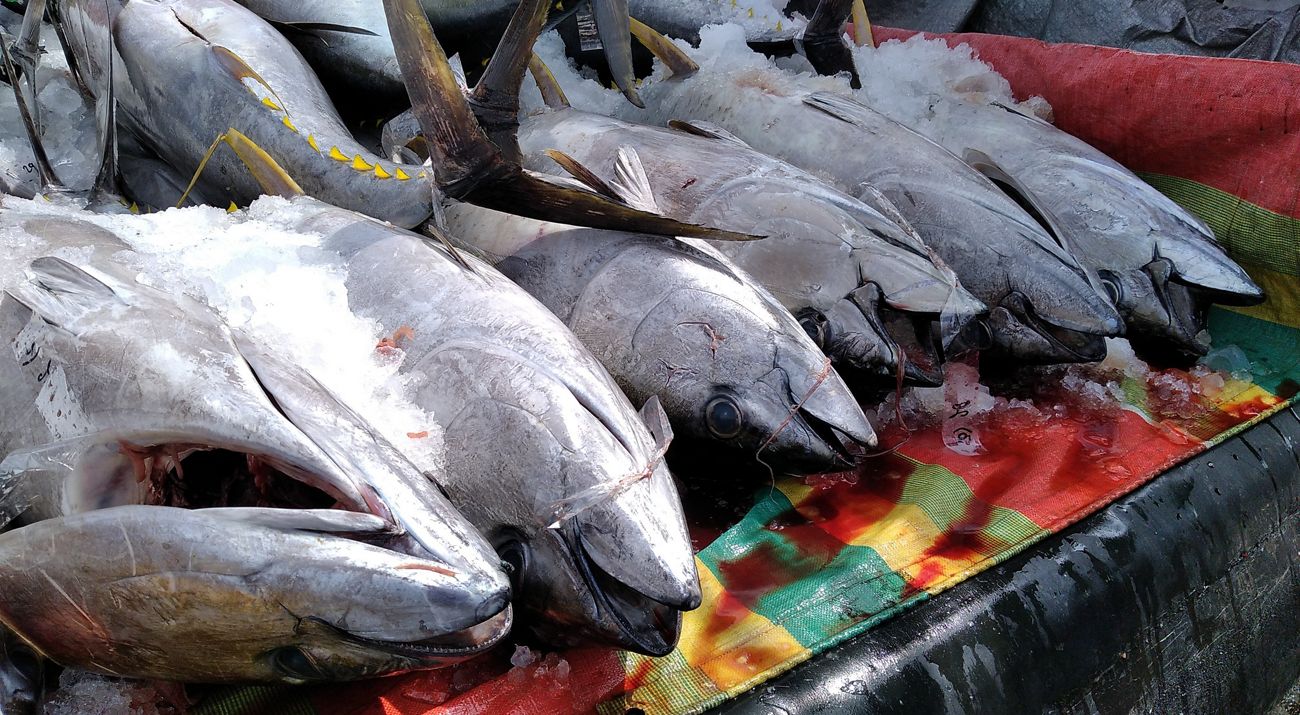
CV Anugerah Bahari Mandiri is a seafood processor and exporter based in Makassar, South Sulawesi, specializing in wild-caught fresh and frozen fishery products. The company exports across multiple species categories, including tuna, pelagic fish, demersal species, cephalopods, and milkfish, in formats such as IQF, block-frozen, and whole round, all of which are caught fresh and immediately processed using blast-freezing technology.
Whether you are a US distributor building a SIMP-compliant supply chain, a Spanish wholesaler looking to diversify sourcing away from traditional European and South American suppliers, or a global seafood trader evaluating Indonesia as a primary sourcing hub, getting in direct contact with a reliable Indonesian partner is the logical first step.
Answers to the Most Searched Questions
What makes Indonesia a leading seafood exporter globally?
Indonesia produces 7% of the world’s seafood, operates over 17,500 islands, and runs a mandatory national traceability system (STELINA), making it the most traceable major seafood exporter.
What is STELINA, and how does it protect buyers?
STELINA is Indonesia’s mandatory national traceability system. It tracks every fishery product from vessel to export, ensuring documentation is clean, complete, and IUU-free.
Does Indonesia comply with US SIMP requirements for seafood imports?
Yes. Indonesian exporters operating under STELINA and GDST-aligned documentation can provide the chain-of-custody records SIMP requires for regulated species.
What frozen seafood products does Indonesia export to the US?
Indonesia exports tuna, snapper, grouper, squid, cuttlefish, ribbon fish, and milkfish, all available in IQF, block-frozen, and whole-round formats.
Is Indonesian seafood MSC or ASC certified?
Many Indonesian exporters carry MSC certification for wild-caught tuna and ASC certification for farmed shrimp, alongside HACCP and ISO food safety standards.
How do I find a reliable seafood supplier in Indonesia?
Work directly with an established seafood supplier company in Makassar or other major export hubs. Verify STELINA registration, export licensing, and third-party certifications before placing orders.
Can Spanish and EU buyers source from Indonesian seafood exporters?
Yes. Indonesia’s Port State Measures and GDST compliance align with EU IUU Regulation No. 1005/2008, making Catch Certificate documentation straightforward for EU importers.
What species does CV Anugerah Bahari Mandiri export?
AB Mandiri exports tuna, pelagic fish (ribbon fish, mackerel), demersal fish (grouper, snapper), cephalopods (squid, cuttlefish), and milkfish from South Sulawesi, Indonesia.