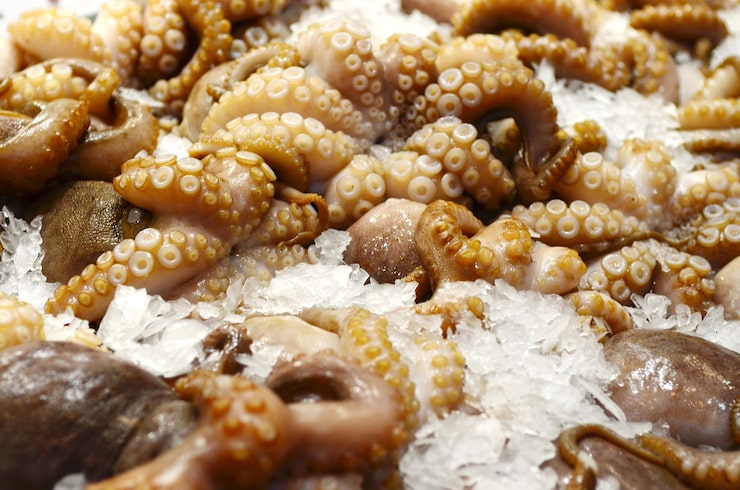
Frozen octopus is defined by four things: size grade (grams per piece), glaze percentage (the protective ice coating), net weight (product without the glaze), and packaging format (block or IQF, packed in a master carton). Agree on all four in writing before you place an order.
When you import octopus from overseas, the right frozen octopus specifications separate a smooth shipment from an expensive surprise. Size, glaze, net weight, and packaging decide how the product cooks, how it is priced, and how it arrives at your cold room. This guide explains each one in plain language, so you can compare offers with confidence.
Before comparing supplier quotations, importers should review the key frozen octopus specifications that affect product quality, pricing and handling. These include the species, size grade, glaze percentage, net weight, freezing format, packaging, and storage requirements. Use the checklist below to confirm details with your supplier before placing an order.
| Specification | What buyers should confirm |
| Species | Scientific name and product origin |
| Size grade | Weight per piece or pieces per kg |
| Product form | Whole, cleaned, tentacles or cut |
| Glaze | Agreed percentage and measurement method |
| Net weight | Weight excluding glaze |
| Freezing format | Block frozen or IQF |
| Packaging | Inner pack, carton weight and dimensions |
| Storage | Required temperature and shelf life |
| Documentation | Export and destination-market requirements |
Why Specifications Matter More Than Price per Kilo
Octopus is traded worldwide. The FAO reports global octopus catches of several hundred thousand tonnes a year, and Indonesia is one of the producing countries supplying export markets in Asia, Europe and the Middle East. With so many sellers, two similar quotes can describe very different products.
A price of USD 6.00 per kilo means little until you know how much of that kilo is octopus and how much is ice. Clear specifications let you compare like with like, and they protect both buyer and supplier from disputes at the port.
1. Size: Grading by Grams per Piece
Size is the first thing chefs and retailers ask about. Whole octopus is usually graded by the average weight of its pieces, and the grade determines which dishes it suits.
- 100-300 g: small octopus, popular for grilling whole, tapas, and salads
- 300-500 g: a versatile mid-size grade for restaurants and food service
- 500-1,000 g: larger pieces for braising, slow cooking and sliced presentation
- 1 kg and above: premium sizes for specialty dishes and high-end buffets
Grade ranges differ between processors, so ask for the exact range, the tolerance, and the average count per kilo. A narrow, consistent grade cooks evenly, which matters more than most buyers expect.
2. Glaze: The Ice Layer That Protects Quality
Glaze is a thin layer of ice applied to frozen octopus to help protect it from freezer burn and surface dehydration during storage and shipping. While glaze helps maintain product quality, clearly specify and agree on the percentage before ordering.
A lower glaze percentage generally means more octopus per carton, while a higher percentage provides additional ice protection. However, the key is transparency. The product specifications and relevant shipping documents should clearly state the agreed glaze percentage, gross weight, and net weight. For glazed products, net weight excludes the weight of the ice coating, subject to applicable destination-market requirements.
Understanding glaze is key to evaluating frozen octopus specifications and comparing supplier quotations. Because glaze adds to the total gross weight, confirming net weight helps importers calculate the actual cost per kilogram of octopus and make more informed purchasing decisions.
3. Net Weight: What You Actually Pay For
Net weight is the weight of the octopus after the glaze has melted away. Gross weight includes the ice. The difference can be larger than it looks.
Illustrative example: A 10 kg block is invoiced at USD 60.
- With 10% glaze, net weight is 9 kg, so the real price is about USD 6.67 per net kg.
- With 20% glaze, net weight is 8 kg, so the real price is USD 7.50 per net kg.
Same carton, same invoice, a 12% difference in true cost. Always ask for the price per net kilo, and ask how the supplier checks glaze, for example by thawing a sample and weighing it.
4. Packaging: Block, IQF and Master Cartons
Packaging is more than a box. It affects shelf life, handling, and how you portion the product. The two most common frozen seafood formats for octopus are blocks and individually frozen pieces.
| Feature | Block frozen octopus | Individually quick frozen octopus (IQF) |
| How it is packed | Pieces frozen together in a single block | Each piece frozen separately, then bagged |
| Best for | Bulk processing, cost-focused buyers | Retail, restaurants, flexible portioning |
| Typical glaze | Often lighter | Usually a light, even glaze per piece |
| Handling | Must be thawed as a whole block | Take out only what you need |
| Typical pack | Around 10 kg per block or carton | Commonly 1 kg bags, 10 kg master carton |
Block frozen octopus is economical and efficient for processors who thaw in volume. IQF suits kitchens and retailers who want to scoop out a few pieces without thawing the rest. Both should be packed in food-grade, clearly labeled materials, stored at -18 degrees C or colder, and shipped in reefer containers that hold that temperature.
A Quick Specification Sheet to Request
Before you confirm any order, ask your supplier to state these in writing:
- Species and origin (catch area or farm region)
- Size grade and tolerance (g per piece or pieces per kg)
- Form: whole, cleaned, tentacles, or cut
- Glaze percentage and net weight per pack
- Packaging: block or IQF, inner pack and master carton size
- Storage and shipping temperature (-18 degrees C or lower)
- Labeling, production and expiry dates, and available documents and certificates
Choosing the Right Partner in Indonesia
Indonesia’s long coastline and active fishing communities make it a natural source of frozen seafood products that reach kitchens worldwide. But a good partner offers more than product. Look for a seafood supplier in Indonesia that gives clear specifications, consistent grading, honest glaze declarations and responsive communication.
A reliable Seafood Distributor in Indonesia will also help you plan shipment schedules, container loading, and documentation, so your cold chain stays unbroken from the port to your door. When comparing Indonesia seafood suppliers, ask for sample frozen octopus specifications and photos of the actual packaging, not just catalog images.
To see what is available, browse the frozen seafood product range at CV Anugerah Bahari Mandiri, read more about our company, or follow our blog for the latest buyer guides. When you are ready to talk specifications, our team is happy to help through the contact page. No pressure, just a conversation about what suits your market.
Frequently Asked Questions
Most frozen octopus carries roughly 5% to 20% glaze by gross weight. Always confirm the exact percentage and net weight on the quotation and invoice.
Gross weight includes the protective ice glaze. Net weight is the octopus alone after thawing, and you should use it to compare prices.
Block is better for bulk processing and tighter budgets. IQF suits retail and restaurants that need flexible portions without thawing an entire block.
By average grams per piece, such as 100-300 g, 300-500 g or 500 g and above. Ask your supplier for exact ranges and tolerances.
Store and ship at -18 degrees C or colder. Keeping a steady temperature protects texture, flavor and shelf life.
Commonly, it is packed in blocks of about 10 kg or 1 kg IQF bags and placed in labeled master cartons. Custom packing is often available on request.
Many suppliers can arrange samples or specification sheets. Contact CV Anugerah Bahari Mandiri to discuss size, glaze and packaging for your market.