Mexican importers looking to diversify beyond traditional Pacific suppliers are increasingly asking the same question: how does seafood actually travel from Indonesian waters to a Mexican port? Working with an established Seafood Export Company in Indonesia removes most of the guesswork, but buyers still need to understand the route, the realistic lead time, and the port requirements before placing a first order. This article breaks down each stage from the fishing grounds to customs clearance in Manzanillo or Ensenada using current shipping data so you can plan procurement with confidence.
Why Are More Mexican Buyers Sourcing Seafood From Indonesia?
Indonesia is one of the world’s largest seafood-producing nations, and its export volume reflects that scale; the country shipped roughly USD 5.95 billion in seafood exports in 2024 alone. For Mexican buyers, that translates into consistent access to tuna, octopus, shrimp, and demersal fish species without competing as hard for supply against North American and European buyers who dominate other sourcing regions. Indonesian fishery products also benefit from a government-backed traceability system, which matters increasingly to Mexican retailers and foodservice brands under pressure to prove sustainable, legally caught sourcing. A reliable seafood supplier in Indonesia can offer competitive pricing on frozen seafood products precisely because of this production scale, while still meeting the documentation standards that Mexican customs expects.
What Is the Shipping Route From Indonesia to Mexico?
There is no direct sailing between Indonesia and Mexico, so every shipment moves through at least one transhipment hub. The typical routing looks like this:
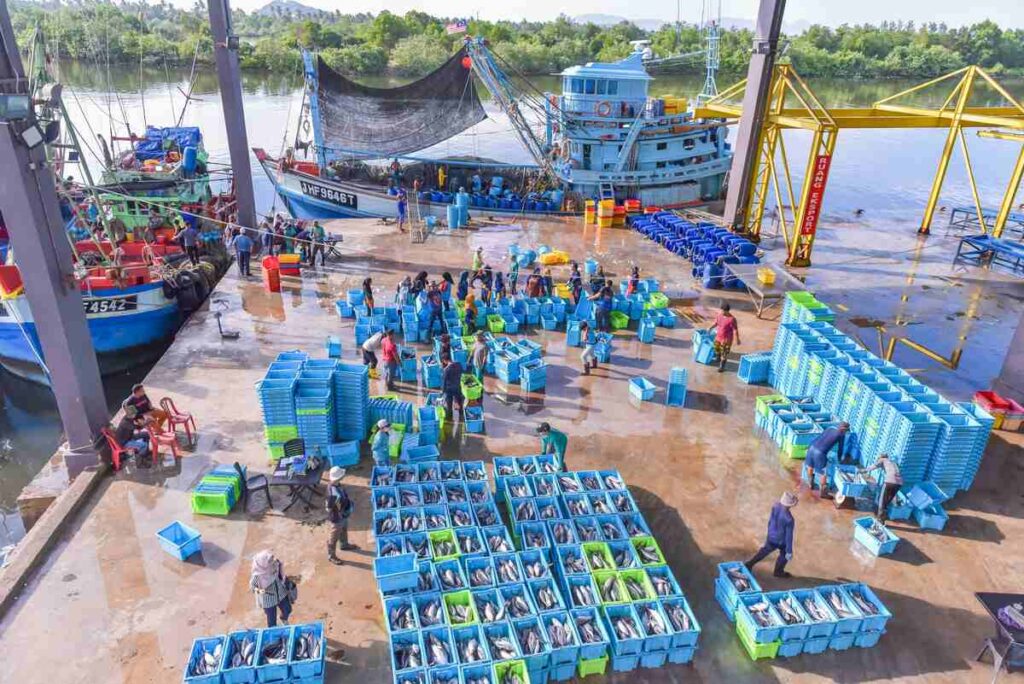
- The origin port is in Indonesia, commonly Makassar, Jakarta (Tanjung Priok), Surabaya, or Belawan, depending on where the seafood exporter is based and which species is being shipped.
- Transhipment hub, vessels connect through Singapore or Port Klang, Malaysia, the two dominant transpacific gateways for Southeast Asian cargo.
- On the transpacific leg, the container crosses the Pacific on a scheduled liner service operated by carriers such as CMA CGM, Maersk, ONE, or MSC.
- Mexican port of discharge, most reefer cargo lands on the Pacific coast at Manzanillo, or occasionally Ensenada; Gulf-bound cargo routes through Veracruz instead, adding several days.
- Inland delivery, once cleared, moves by truck or rail to Mexico City or other inland distribution points, typically within two to five days.
Because of this multi-leg structure, working with an experienced seafood trader who already has carrier relationships on the Asia–Mexico lane matters more than it would on a direct route. Routing errors or a missed transhipment window can add a week or more to delivery.
How Long Does Shipping Take From Indonesia to Mexico?
Lead time is the single biggest planning variable for Mexican importers, and it depends heavily on origin port and transhipment efficiency. As a general benchmark:
| Stage | Estimated Time |
| Booking, documentation, and export handling in Indonesia | 3–5 days |
| Sea freight, origin port to Singapore/Port Klang hub | 2–4 days |
| Transpacific crossing, hub to Manzanillo | Roughly 30–33 days core sea transit |
| Customs clearance at a Mexican port | 2–7 days (faster with pre-cleared digital documentation) |
| Inland trucking/rail to Mexico City | 2–5 days |
| Total door-to-door lead time | 33–45 days |
Air freight is available for high-value or urgent shipments of frozen seafood, cutting transit time to roughly 5–10 days, but it comes at a significantly higher cost per kilogram and is generally reserved for premium species or emergency restocking rather than routine volume orders.
Which Ensenada Port & Mazatlan Port Handle the Most Seafood Imports?
Three ports account for nearly all containerized seafood arriving from Asia:
- Manzanillo (MXZLO), Mexico’s busiest Pacific container port, handles roughly half of all Pacific coast container traffic. It’s the default discharge point for most Indonesia-to-Mexico seafood export products because of its established reefer infrastructure and carrier frequency.
- Lazaro Cardenas (MXLZC), a fast-growing alternative with less congestion than Manzanillo, is increasingly favored by forwarders looking to shave a few days off inland transit to central Mexico.
- Veracruz (MXVER), the largest Mexican port overall, but it sits on the Gulf coast, meaning Asia-origin cargo takes a longer, more circuitous route to reach it.
Collectively, Mexico’s Pacific ports move more than 10 million TEUs a year, so capacity generally isn’t the bottleneck; documentation and cold-chain handling on arrival determine how quickly a shipment reaches a Mexican buyer’s warehouse.
What Port and Customs Requirements Apply to Seafood Imports?
Every shipment needs a consistent documentation set, regardless of which Mexican port receives it:
- Commercial invoice and packing list matching the container’s actual contents
- Bill of lading issued by the carrier or freight forwarder
- Certificate of origin, increasingly important given evolving tariff rules on Asian imports
- Health/sanitary certificate confirming the frozen seafood exporter’s HACCP compliance
- Catch certificate or traceability documentation, particularly for wild-caught fishery products
- Import permits and compliance with Mexico’s sanitary agency (SENASICA) requirements for aquatic products
Buyers working with a seafood export company that pre-clears documentation digitally before the vessel arrives typically save three to seven days versus shipments where paperwork is assembled after arrival — a meaningful difference when the product inside the container is perishable.
How Is the Cold Chain Protected During a 30+ Day Voyage?
A five-week ocean crossing only works if the reefer container never breaks down. Product is blast-frozen at the processing facility in Indonesia to a stable core temperature before loading, then shipped in a calibrated reefer unit that’s monitored and, increasingly, tracked in real time through carrier apps. Reputable frozen seafood products suppliers also stage cargo to minimize the number of times a container is transferred between vessels, since every transhipment is a point where temperature control can be interrupted. This is one of the clearest differentiators between a seasoned seafood export company in Indonesia and a smaller trader without dedicated cold-chain protocols. The difference shows up not in the invoice, but in the product quality when the container is opened in Manzanillo.
What Does It Cost to Import Seafood From Indonesia to Mexico?
Freight costs vary by container size and current carrier rates, but as a rough guide, a 20-foot reefer container typically runs between USD 1,200 and 1,800, while a 40-foot container ranges from roughly USD 2,000 to 2,800, excluding inland trucking and customs fees. Rates fluctuate seasonally. Q3 and Q4 peak season can push prices up 20–50%, so buyers working with a seafood supplier company that books space early or holds standing carrier contracts often lock in meaningfully better rates than spot bookings.
How Do You Choose the Right Seafood Export Company in Indonesia?
Not every seafood exporter operating out of Indonesia has the infrastructure to reliably serve the Mexico lane. Buyers should look for a partner that can demonstrate:
- A track record of shipments actually landing at Manzanillo or Ensenada, not just theoretical capability
- HACCP-certified processing facilities and documented cold-chain protocols
- In-house or closely partnered customs and documentation support for both Indonesian export and Mexican import requirements
- Product range flexibility: tuna, octopus, shrimp, and other fishery products, so sourcing doesn’t require juggling multiple suppliers
- Transparent communication on lead times, since a seafood export company that can’t give a realistic delivery window makes inventory planning very difficult
Choosing the right Seafood Export Company in Indonesia is ultimately less about finding the lowest quoted price and more about finding a partner whose documentation, cold-chain discipline, and carrier relationships hold up over a 30- to 45-day journey.
Conclusion
Shipping seafood from Indonesia to Mexico is a well-established but multi-stage process: an Asian hub transhipment, a transpacific crossing of roughly 30-plus days, a Pacific coast port of entry, and a documentation set that has to be right the first time. Buyers who understand this timeline and who partner with an experienced seafood export company in Indonesia can plan inventory with confidence rather than guesswork. CV Anugerah Bahari Mandiri ships fresh and frozen fishery products from Makassar to buyers across the Americas, including Mexico, with the traceability and cold-chain standards Mexican importers increasingly require. Contact CV Anugerah Bahari Mandiri to request a quote and lead-time estimate for your next shipment.
FAQ SECTION
Door-to-door lead time typically runs 33–45 days, covering export handling, transhipment through Singapore, the trans-Pacific crossing, and Mexican customs clearance.
Manzanillo handles the largest share of Pacific coast container traffic and is the default discharge port for most Indonesia-origin reefer cargo.
No. All shipments transship through hubs like Singapore or Port Klang before crossing the Pacific to Mexican ports.
Commercial invoice, packing list, bill of lading, certificate of origin, sanitary/health certificate, catch certificate, and SENASICA import permits.
A 20-foot reefer container generally costs USD 1,200–1,800, while a 40-foot container runs USD 2,000–2,800, excluding inland transport.
The product is blast-frozen before loading and shipped in monitored reefer containers, with minimal transhipment stops to avoid temperature breaks.
Yes, air freight cuts transit time to about 5–10 days but costs significantly more, so it’s usually reserved for urgent or high-value orders.
HACCP certification, proven Mexico-route shipping history, strong documentation support, and transparent, realistic lead-time estimates.